Mevion Medical Systems will introduce the MEVION S250-FIT Proton Therapy System to the European radiation oncology market at ESTRO 2026, positioning the device as the first proton therapy platform designed for installation in a standard LINAC vault. The system is U.S. FDA-cleared and CE-marked, giving Mevion a regulatory foundation to target cancer centers that want proton therapy capability without building a separate proton facility.
The significance of the launch is not simply that another proton therapy system is entering the European market. The larger question is whether Mevion Medical Systems can change the adoption logic for proton therapy itself. For decades, proton therapy has carried a strong clinical rationale in selected cancers because of its ability to reduce radiation dose to surrounding healthy tissue, but the technology has also been tied to major infrastructure demands, complex shielding requirements, long planning cycles, and large capital commitments. By designing the MEVION S250-FIT Proton Therapy System for a LINAC vault, Mevion is trying to move proton therapy closer to the operating model of conventional radiotherapy departments rather than treating it as a standalone mega-project.
Why LINAC vault compatibility could reshape proton therapy adoption in Europe
For European cancer centers, the LINAC vault claim is commercially and operationally important because it speaks directly to one of proton therapy’s most stubborn barriers. Many hospitals already understand the clinical appeal of proton radiation therapy, especially where dose sparing may matter in pediatric cancers, head and neck tumors, central nervous system tumors, and other anatomically sensitive cases. What has often slowed adoption is not lack of interest, but the difficulty of fitting proton therapy into real-world hospital estates, public health budgets, reimbursement structures, and staffing models.
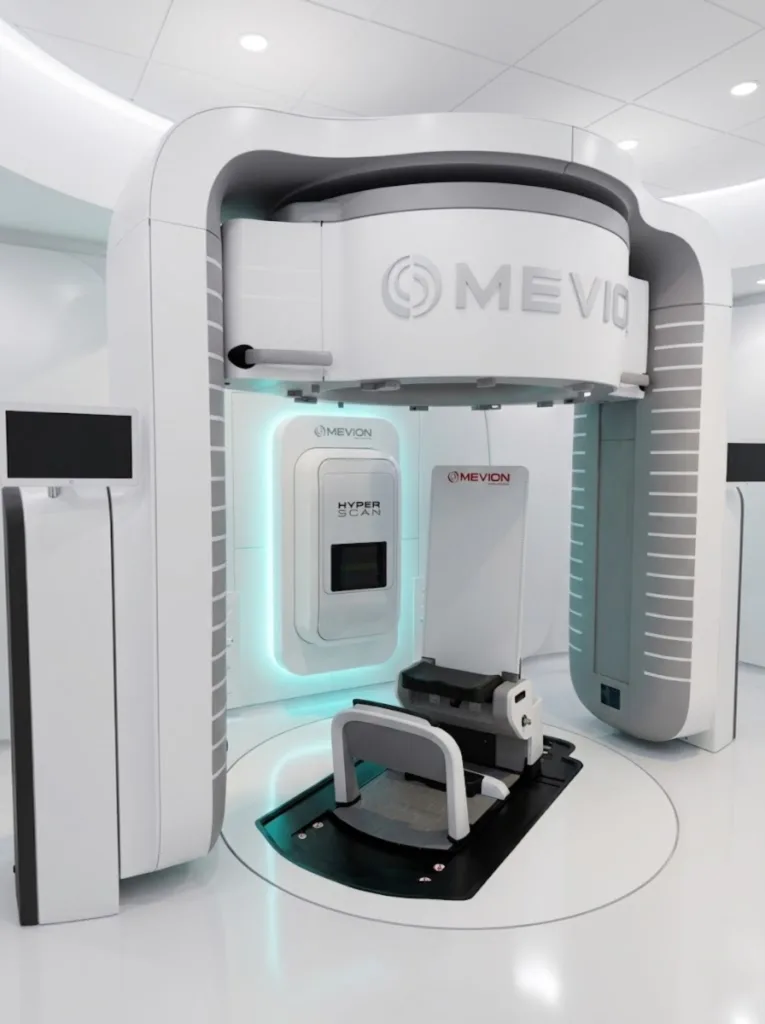
The MEVION S250-FIT Proton Therapy System is therefore being pitched into a market where infrastructure efficiency may matter almost as much as beam technology. A platform that can be integrated into an existing radiotherapy environment could shorten the strategic distance between clinical ambition and capital approval. For hospital boards, that may make proton therapy easier to evaluate alongside LINAC replacement cycles, oncology service expansion plans, and regional cancer network strategies.
The limitation is that vault compatibility does not automatically solve every adoption issue. Hospitals still need to assess shielding, patient throughput, imaging workflows, treatment planning systems, service contracts, staff training, referral volumes, and payer acceptance. A compact footprint can make a proton therapy project more feasible, but feasibility is not the same as guaranteed utilization. The commercial test for Mevion Medical Systems will be whether cancer centers see S250-FIT as an operationally credible addition to existing radiotherapy departments, not just as a smaller version of an expensive technology category.
What Mevion’s S250-FIT changes compared with traditional proton therapy models
Traditional proton therapy has often been associated with large facilities, multi-room systems, and major construction projects. Compact single-room systems already narrowed that gap, but the MEVION S250-FIT Proton Therapy System pushes the argument further by linking proton therapy deployment to the familiar LINAC vault environment. That distinction matters because the decision-making unit inside a hospital may change when proton therapy becomes a radiotherapy program extension rather than a separate real estate and infrastructure program.
The system also brings Mevion’s HYPERSCAN pencil beam scanning platform and Adaptive Aperture proton multi-leaf collimator into a compact configuration. For clinicians, pencil beam scanning and intensity modulated proton therapy are central to the modern proton value proposition because they support conformal dose delivery and treatment personalization. The broader strategic point is that Mevion Medical Systems is not presenting S250-FIT merely as a space-saving device. It is presenting the platform as a way to combine compact deployment with advanced proton therapy workflows.
However, the market will still ask whether compactness comes with trade-offs. Radiation oncology teams will examine patient selection, anatomical coverage, treatment setup, motion management, imaging quality, adaptive workflow readiness, service reliability, and throughput. The use of upright patient positioning with Leo Cancer Care’s Marie system adds another layer of differentiation, but it also introduces a workflow shift for departments accustomed to supine treatment models. Adoption may depend on whether clinicians view upright positioning as a practical clinical advance or as an additional operational learning curve.
Why the Stanford Medicine installation gives Mevion a stronger proof point
The Stanford Medicine installation gives Mevion Medical Systems a valuable real-world reference site because the first S250-FIT deployment was installed inside an existing Stanford Medicine Cancer Center LINAC vault in Palo Alto. That matters because the market for compact proton therapy is not driven only by technical specifications. It is driven by institutional confidence, and early deployment at a high-profile academic cancer center can help reduce perceived risk for other hospitals considering the same platform.
For European health systems, the Stanford example may be especially relevant because many cancer centers operate within constrained hospital campuses, public funding systems, and long infrastructure approval cycles. A system that has already been installed within an existing vault gives decision-makers a more concrete model to evaluate. It also helps Mevion Medical Systems shift the conversation from theoretical compactness to implementation experience.
The risk is that Stanford Medicine may not be representative of every hospital environment. Leading academic centers often have stronger planning resources, specialist teams, research infrastructure, and capital access than regional oncology providers. European centers will still need to test whether the Stanford model translates into their own buildings, procurement systems, staffing levels, and reimbursement pathways. A first installation is a milestone, but the harder proof will come from repeatable deployment across different hospital types.
How upright patient positioning could influence clinical workflow and differentiation
The pairing of the MEVION S250-FIT Proton Therapy System with Leo Cancer Care’s Marie Upright Patient Positioning and CT Imaging System is one of the more strategically interesting parts of the platform. Upright positioning has long been discussed as a way to improve patient comfort, create different anatomical presentation during treatment, and potentially support motion management in selected cases. Integrating diagnostic CT into the upright platform also points toward a workflow model where imaging, positioning, and treatment delivery are more tightly linked.
For Mevion Medical Systems, this partnership helps distinguish S250-FIT from compactness alone. A smaller proton therapy system can reduce infrastructure friction, but a differentiated treatment environment may give clinicians a stronger reason to rethink workflow. If upright positioning proves practical in routine oncology operations, it could support a more patient-centered treatment experience while also opening new planning discussions around organ motion, setup reproducibility, and anatomical stability.
The unresolved question is how quickly upright workflows can be absorbed into busy radiotherapy departments. Radiation oncology is highly protocol-driven, and any change in patient positioning affects simulation, immobilization, imaging, planning, verification, staffing, and quality assurance. Clinicians will want evidence that the upright model is not only technically elegant but also dependable at scale. Without that, the differentiator could become a source of adoption caution rather than acceleration.
Why regulatory clearance and CE marking matter, but do not remove commercial risk
The U.S. FDA clearance and CE marking under Regulation (EU) 2017/745 give Mevion Medical Systems a stronger commercial platform for S250-FIT. In Europe, CE marking is especially important because hospitals and procurement bodies need regulatory certainty before evaluating clinical deployment. The fact that S250-FIT has both U.S. and European regulatory footing helps Mevion present the device as a cross-market platform rather than an early-stage engineering concept.
That regulatory position also arrives at a useful moment for European radiotherapy providers. Many health systems are trying to modernize cancer infrastructure while managing capital pressure, workforce constraints, and rising oncology demand. Proton therapy has often been perceived as clinically attractive but financially difficult. A system designed around existing vault integration could fit into modernization plans more naturally than large standalone proton projects.
Even so, regulatory clearance does not answer the economic question. Hospitals will still need to justify patient volumes, treatment mix, reimbursement coverage, long-term service costs, and return on invested capital. In publicly funded health systems, proton therapy adoption often depends on national treatment guidelines, referral pathways, and health technology assessment logic. If payers restrict indications or reimbursement remains narrow, a smaller footprint may not be enough to unlock broad deployment.
What clinicians and hospital executives are likely to watch after ESTRO 2026
After ESTRO 2026, the most important signal will not be booth interest alone. It will be whether Mevion Medical Systems converts the S250-FIT value proposition into additional European contracts, site planning activity, and clinical implementation timelines. The radiation oncology community will likely watch how the system performs in routine clinical settings, how quickly sites can move from procurement to treatment, and whether upright proton workflows can deliver reliable throughput.
Clinicians will also watch the maturation of advanced capabilities such as DirectARC proton arc therapy support, adaptive workflows, and FLASH research readiness. These features can strengthen the long-term technology story, but they also need careful framing. FLASH research readiness is not the same as commercial availability for human clinical use, and proton arc therapy adoption will depend on clinical validation, software maturity, treatment planning integration, and regulatory boundaries.
For industry observers, Mevion’s launch highlights a broader shift in radiation oncology: the next competitive frontier may not be only dose physics, but deployability. Cancer centers increasingly need technologies that fit into existing estates, budgets, staffing patterns, and multidisciplinary care pathways. If S250-FIT can reduce the structural burden of proton therapy while preserving advanced treatment capability, Mevion Medical Systems could make proton therapy a more realistic option for centers that previously saw it as out of reach.
Mevion is attacking proton therapy’s most practical bottleneck
The strategic importance of the MEVION S250-FIT Proton Therapy System is that it targets the practical bottleneck that has limited proton therapy adoption for years. The clinical argument for proton therapy has always been strongest when reduced dose to healthy tissue can meaningfully affect toxicity, survivorship, or treatment planning flexibility. The commercial weakness has been that many hospitals could not justify the infrastructure leap required to offer it.
Mevion Medical Systems is now trying to collapse that gap by making proton therapy look less like a separate facility decision and more like an upgrade path within radiotherapy. That is a sharper and more credible adoption thesis than simply claiming proton therapy is advanced. In medical technology markets, the winning platform is often not the most technically dramatic one, but the one that fits existing clinical behavior closely enough to scale.
Still, S250-FIT will have to prove that smaller infrastructure does not create hidden complexity elsewhere. If installation is easier but workflow integration is difficult, the market may remain cautious. If upright positioning improves patient experience but slows throughput, hospitals may hesitate. If reimbursement remains restrictive, even the most compact system may struggle to move beyond leading academic centers and well-funded regional networks.
Mevion’s opportunity is real because the platform addresses a genuine market constraint. Its challenge is equally real because proton therapy remains a capital-intensive, evidence-sensitive, and reimbursement-dependent field. ESTRO 2026 gives Mevion Medical Systems a strong European stage. The next phase will show whether LINAC vault-ready proton therapy becomes a new category standard or remains a compelling innovation adopted mainly by early movers.