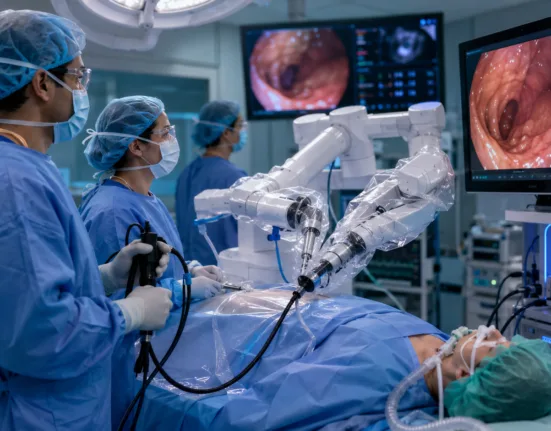
Aqua Medical has treated the second US patient, and the first on the West Coast, in its RESTORE-1 clinical study of Proximal Intestinal Mucosal Ablation, moving an unusual medical-device strategy for type 2 diabetes into another participating center as investigators test whether endoscopically resurfacing part of the small intestine can produce measurable improvements in glucose control. The procedure was performed at Hoag Hospital in Newport Beach, California, following the first US case at the University of North Carolina in July.
RESTORE-1 is being conducted under an FDA-approved Investigational Device Exemption, which allows Aqua Medical to study the investigational RF Vapor Ablation system in the United States. That authorization should not be confused with FDA approval of PIMA as a treatment for type 2 diabetes. The device remains investigational for this use, and the current pilot study is designed primarily to establish safety, tolerability and an initial efficacy signal before a larger development programme could be justified.
The study is small, open-label and single-arm, with estimated enrollment of only 20 participants. Its importance lies less in providing a definitive comparison with modern diabetes medicines and more in answering whether Aqua Medical’s endoscopic metabolic-restoration concept is sufficiently safe and biologically active to merit substantially larger trials.
How does the PIMA procedure attempt to influence type 2 diabetes?
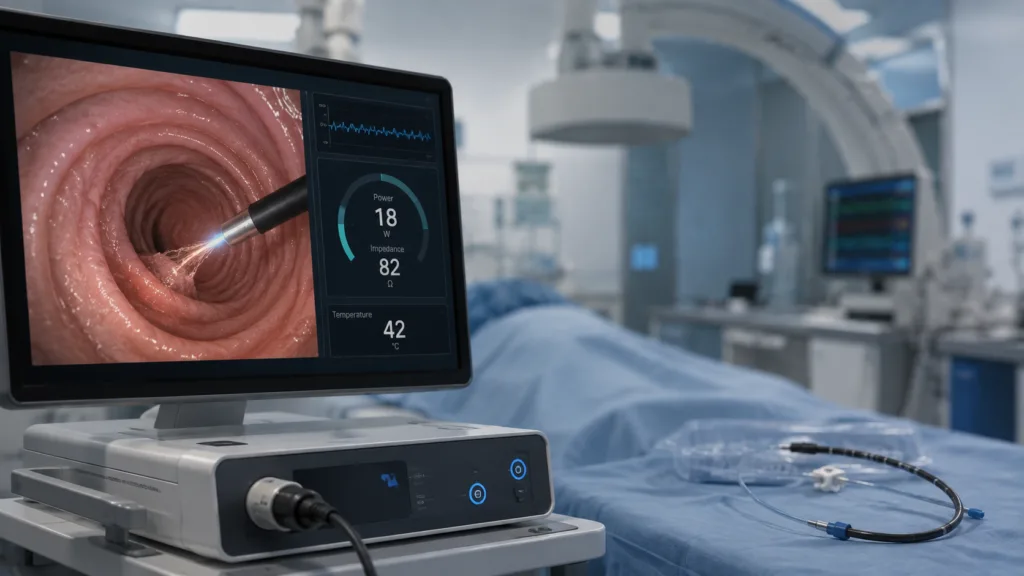
PIMA uses Aqua Medical’s radiofrequency vapor ablation technology to treat a segment of the proximal small-intestinal mucosa through the working channel of a standard endoscope. The procedure is intended to ablate the existing mucosal surface and allow it to regenerate, based on the hypothesis that altered signaling from the proximal intestine contributes to insulin resistance and metabolic dysfunction in type 2 diabetes.
Unlike bariatric surgery, the approach does not remove or reroute part of the gastrointestinal tract. Aqua Medical says the procedure can be performed without surgery or fluoroscopy and is designed to fit within existing therapeutic endoscopy workflows.
The broader scientific rationale comes partly from observations that metabolic surgery can improve glucose regulation rapidly, sometimes before large amounts of body weight are lost. That has generated sustained interest in whether some of those effects can be reproduced through less invasive interventions targeting the duodenum or proximal small intestine.
Several companies and academic groups have explored duodenal mucosal resurfacing using different energy modalities, making Aqua Medical’s programme part of a broader effort to develop endoscopic metabolic therapies rather than an isolated concept.
PIMA differs technically by using RF vapor ablation. The procedure delivers controlled radiofrequency-generated vapor to the mucosal surface, aiming to create a circumferential treatment zone while avoiding surgical alteration of gastrointestinal anatomy.
The biological mechanism remains under investigation. Regeneration of treated mucosa could theoretically alter signaling pathways involved in insulin sensitivity, nutrient sensing and glucose metabolism, but RESTORE-1 is not designed to prove a complete molecular mechanism.
What exactly is RESTORE-1 measuring in its 20 participants?
ClinicalTrials.gov identifies RESTORE-1 as NCT07355270, an open-label, prospective, single-group device trial sponsored by Aqua Medical. Estimated enrollment is 20 adults between 22 and 65 years of age with type 2 diabetes of between one and 15 years’ duration. Participants must have baseline HbA1c between 7.5% and 10% and a body mass index between 24 and 40 kg/m² while receiving one or more non-insulin glucose-lowering medications on a stable regimen.
Safety is a primary component of the study. Investigators will track device- or procedure-related serious adverse events and unanticipated adverse device effects through six months. Tolerability will be evaluated using patient-reported pain scores during the first 14 days.
The principal efficacy measurement is change in HbA1c from baseline to six months after the procedure. Secondary measures include three-month HbA1c, fasting plasma glucose, insulin-resistance markers and the proportion of participants achieving an HbA1c improvement greater than 0.5 percentage points at six months.
These endpoints make RESTORE-1 more informative than a simple procedural-feasibility study, but its design imposes clear limitations. There is no randomized control group, enrollment is small and participants continue receiving background glucose-lowering therapy. Consequently, any HbA1c improvement will need careful interpretation before it can be attributed confidently to PIMA itself.
A larger controlled programme would ultimately be required to determine how much glycemic benefit the procedure adds over optimized pharmacological care.
What have Aqua Medical’s earlier PIMA studies suggested?
Early studies have produced signals strong enough to justify the US IDE programme, although the evidence remains preliminary.
The STEAM-IE study investigated whether PIMA could allow insulin-treated patients with type 2 diabetes to discontinue exogenous insulin. An early American Diabetes Association abstract reported on five treated participants who had undergone the procedure successfully, with no serious adverse events reported at that stage and all five remaining off insulin during relatively short follow-up.
Those initial results were notable but especially vulnerable to overinterpretation because the sample was extremely small and mean follow-up was only around one month at the time of the report. Short-term discontinuation of insulin does not establish durable metabolic control.
Aqua Medical subsequently listed final STEAM-IE results in Gastroenterology during 2026, reflecting continued development of the clinical dataset. The company’s clinical programme also includes an earlier pilot evaluating duodenal mucosal RF vapor ablation in type 2 diabetes.
RESTORE-1 is strategically different because it represents the formal US IDE pathway. The study includes four US centers: the University of North Carolina School of Medicine, Hoag Memorial Hospital Presbyterian, Mayo Clinic in Arizona and HonorHealth Research Institute.
The first US patient was treated at the University of North Carolina in July, while Hoag’s August procedure brought a second center into active patient treatment. Expanding enrollment across several institutions should provide more information on whether the technique can be executed consistently outside the earliest investigator group.
Could an endoscopic procedure compete with GLP-1 and other powerful diabetes medicines?
That is likely to become the central commercial question if PIMA ultimately proves effective.
The therapeutic landscape for type 2 diabetes has changed dramatically. GLP-1 receptor agonists, dual incretin therapies, SGLT2 inhibitors and other medications can produce substantial improvements in glycemic control while also addressing cardiovascular, renal or weight-related risks in selected populations.
Any invasive or semi-invasive metabolic intervention must therefore demonstrate value against a much higher standard than existed a decade ago. Avoiding daily medication is not enough if the procedure provides inferior glucose control, introduces procedural risk or requires repeated intervention.
PIMA could nevertheless occupy a different role if it produces durable metabolic improvement following a single endoscopic procedure. Patients who cannot tolerate certain medicines, struggle with long-term adherence or remain poorly controlled despite available therapies could potentially represent relevant populations.
Durability will be crucial. A treatment that lowers HbA1c for several months but loses its effect as the mucosa regenerates differently over time may struggle to justify procedural complexity. Conversely, a clinically meaningful benefit lasting for years could change the economics substantially.
RESTORE-1 follows participants for six months, which is appropriate for an early pilot but too short to answer the long-term durability question comprehensively.
What needs to happen before PIMA can become a real diabetes-treatment option?
The immediate milestone is successful completion of the 20-patient US pilot without unacceptable safety signals. The study’s estimated primary completion is December 2026, with overall completion anticipated in March 2027.
If safety and HbA1c results are encouraging, Aqua Medical would still need a larger clinical programme capable of establishing effectiveness with considerably greater confidence. A randomized comparison against sham treatment, optimized medical therapy or another appropriate control would provide much stronger evidence than the current single-arm study.
Investigators will also need to understand which patient characteristics predict response. Type 2 diabetes encompasses patients with widely different disease durations, beta-cell reserve, insulin resistance, obesity and treatment histories. A procedure acting partly through intestinal signaling may not work equally well across that spectrum.
Reimbursement and procedural adoption would present additional challenges. PIMA requires interventional endoscopy expertise and access to an endoscopy suite, meaning commercial adoption would likely depend on collaboration between gastroenterologists, endocrinologists and health systems.
The second US procedure therefore marks progress rather than validation. Aqua Medical has moved its metabolic endoscopy technology into a multicenter FDA-authorized investigation, and the study now has specific six-month efficacy and safety questions to answer.
If PIMA can generate a meaningful HbA1c improvement without significant procedural complications, a larger trial would become much easier to justify. If the metabolic effect proves modest or transient, the rapidly improving drug landscape will make the commercial hurdle considerably harder.