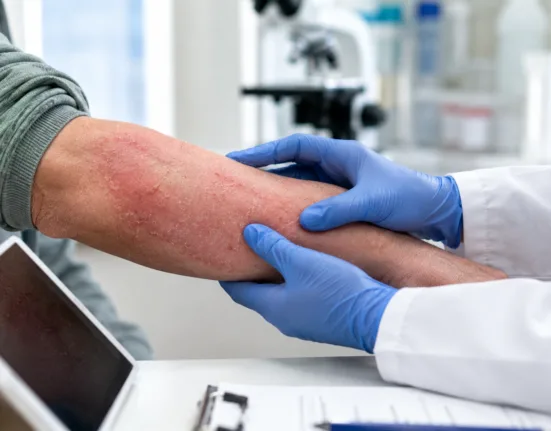
Arcutis Biotherapeutics has secured U.S. Food and Drug Administration acceptance of its supplemental New Drug Application for Zoryve roflumilast cream 0.05 percent to expand treatment of mild to moderate atopic dermatitis to infants aged 3 to 24 months. The filing moves the steroid-free topical therapy into a regulatory review with a target action date of February 23, 2027, placing the immunodermatology-focused company in front of a clinically sensitive pediatric population where treatment choices remain narrow.
Why the infant atopic dermatitis filing changes the commercial frame for Zoryve
The most important part of the Arcutis Biotherapeutics update is not simply that another Zoryve filing has entered review. It is that the U.S.-based dermatology drug developer is trying to extend the same branded topical franchise across a much broader age continuum, from infants through older children and adults, while preserving the simplicity of a once-daily, nonsteroidal positioning. That matters because atopic dermatitis is not a single commercial episode. It is a chronic, relapsing inflammatory skin condition that often begins early in life and can follow families for years through changing severity, body areas, caregiver concerns, and treatment tolerance issues.
The confirmed development gives Arcutis Biotherapeutics a regulatory bridge from its existing approval in children aged 2 to 5 years into a younger population where clinicians tend to be more cautious about repeated topical steroid exposure, application on sensitive skin areas, and caregiver adherence. For pediatric dermatologists, the value proposition is less about novelty for novelty’s sake and more about having an option that could be used with a clearer age-specific label if the agency is satisfied with the infant dataset. For the company, that kind of label expansion could make Zoryve look less like a single product line and more like a lifecycle-managed dermatology platform.
The risk is that infant atopic dermatitis is precisely the kind of setting where regulators may scrutinize safety margins, systemic exposure, formulation tolerability, and real-world caregiver use with more intensity than they would in older children. The filing is supported by short-duration studies, including an open-label Phase 2 infant study and a Phase 1 pharmacokinetic study. That is not the same as a large, randomized, vehicle-controlled infant trial powered to prove a hard efficacy advantage. The regulatory question is therefore not whether the dataset looks encouraging, but whether it is robust enough for an infant label in a chronic disease category where repeat use and long-term safety matter.
What the infant dataset suggests about clinical relevance and where it remains thin
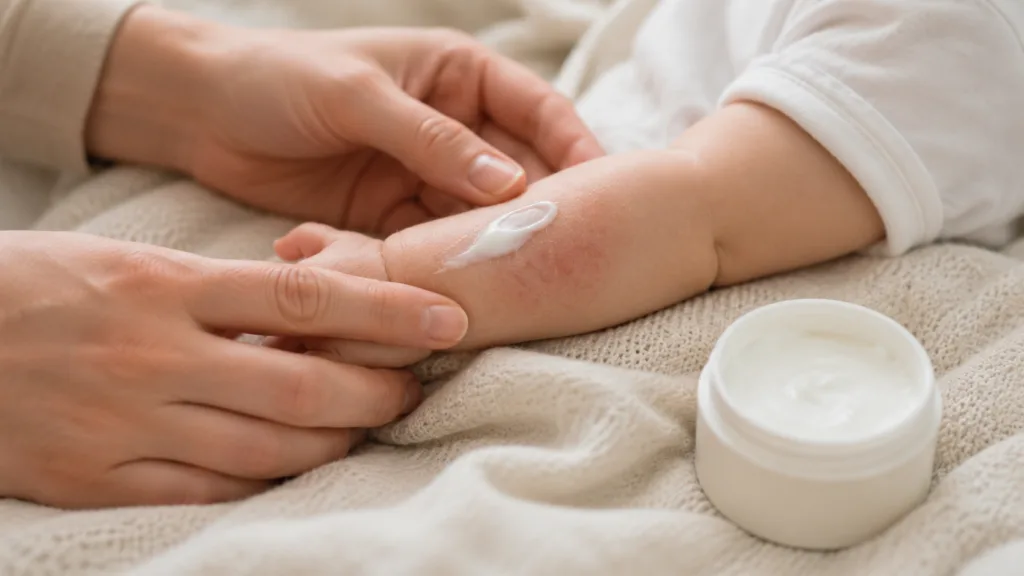
The development package gives Arcutis Biotherapeutics a usable clinical story because it includes safety, tolerability, pharmacokinetic, and exploratory efficacy measures in infants with mild to moderate atopic dermatitis. The reported study design evaluated once-daily Zoryve roflumilast cream 0.05 percent over four weeks, with the Phase 2 INTEGUMENT-INFANT study enrolling 101 infants and the pharmacokinetic study enrolling 19 infants. That creates a coherent regulatory package for a topical product already approved in nearby pediatric age groups, especially if systemic exposure remains consistent with prior expectations.
Clinically, the strongest signal is not one single endpoint. It is the combination of global assessment improvement, Eczema Area and Severity Index response, scalp involvement data, and caregiver-reported itch improvement. In infant atopic dermatitis, itch and sleep disruption carry disproportionate family burden. A therapy that can show early symptom improvement, tolerability, and applicability across sensitive sites could be meaningful for clinicians who spend as much time managing caregiver anxiety as managing skin inflammation. That is where the filing has practical relevance beyond the headline. Infants are not simply smaller pediatric patients. Their skin barrier, body surface area exposure, and caregiver-controlled treatment patterns all complicate topical therapy.
However, the limitations are equally important. A four-week open-label study can support consistency and generate confidence, but it does not fully answer durability, flare prevention, intermittent retreatment, or comparative effectiveness against the entrenched standard of topical corticosteroids. It also does not show how the therapy performs in a messy home environment where caregivers may underapply, overapply, combine treatments, or stop once visible symptoms improve. Industry observers tracking pediatric dermatology will therefore watch whether the Food and Drug Administration asks for more information around exposure, age subgroup consistency, or postmarketing commitments.
What is genuinely new versus incremental in the Zoryve label strategy
The genuinely new element is the possible move into infants aged 3 to 24 months, not the mechanism or the broader Zoryve dermatology concept. Roflumilast is already established as a topical phosphodiesterase 4 inhibitor within the Zoryve franchise, and Arcutis Biotherapeutics has already built regulatory momentum across inflammatory dermatoses. The infant filing is therefore incremental from a platform standpoint but potentially meaningful from a label architecture standpoint. That distinction matters because investors may initially view the update as another expected lifecycle step, while clinicians may view the age expansion as more consequential if it creates a clearer treatment pathway for very young children.
The comparison with existing therapies is where the strategic logic becomes sharper. Topical corticosteroids remain deeply embedded in atopic dermatitis care because they are familiar, inexpensive, and effective. Topical calcineurin inhibitors and other nonsteroidal options have roles, but each comes with its own age limits, tolerability considerations, labeling history, or payer friction. Zoryve’s commercial pitch depends on whether a once-daily, steroid-free cream can occupy the middle ground between caregiver comfort and sufficient clinical activity. That is not a small task, because branded topical dermatology is a reimbursement battlefield where efficacy, safety, texture, site flexibility, and formulary access all matter.
The unresolved question is whether payers will treat an infant label expansion as a clinically differentiated need or as a higher-cost alternative to inexpensive generic options. Even if the Food and Drug Administration grants approval, Arcutis Biotherapeutics will still need to convince formularies that infant use is not merely a broader label but a population with distinct needs. The company’s commercial challenge will be to avoid a situation where dermatologists like the option, caregivers want the option, but reimbursement steps slow adoption. In dermatology, the prescription is only the opening act. The prior authorization paperwork is often the uninvited sequel.
Why reimbursement and caregiver behavior may decide the real market impact
The Zoryve infant atopic dermatitis opportunity looks attractive because the treated population is large enough to matter but specialized enough to support a differentiated message. The company has highlighted the scale of topically treated children under age 2 in the United States, which gives the filing a commercial rationale beyond niche pediatric labeling. If approved, Zoryve could become part of a broader branded continuum where dermatologists, pediatricians, and caregivers recognize the same product family across age groups and inflammatory skin diseases.
That said, infant atopic dermatitis is not always managed by dermatologists. Many cases begin in primary care or pediatric offices, where prescribing behavior can be more conservative and cost-sensitive. This creates a go-to-market complication. Arcutis Biotherapeutics may need education not only for specialists but also for pediatric clinicians who decide when to escalate beyond moisturizers, low-potency topical steroids, and general skin care routines. A clean infant label could help, but it will not automatically overcome habit, payer restrictions, or the simple fact that pediatric visits are often brief and crowded with competing priorities.
The company’s stock reaction also suggests that investors are treating the filing as strategically positive but not transformative on its own. Arcutis Biotherapeutics shares traded lower intraday despite the regulatory milestone, which implies that the market may already have expected progress or remains focused on execution, revenue growth, profitability, and broader dermatology franchise uptake. That muted sentiment is not necessarily negative. It simply shows that investors want proof of conversion, not another promise that a label can expand. In biotech, regulatory acceptance gets you in the room. Commercial performance decides whether anyone keeps listening.
What clinicians, regulators and industry observers will watch before February 2027
The next critical question is whether the Food and Drug Administration completes its review without requesting additional data. The target action date creates a defined catalyst, but it also creates a period in which every detail of the infant package will be judged against the higher caution normally applied to very young children. Regulators are likely to focus on pharmacokinetics, adverse event patterns, consistency with older pediatric data, and the safety logic for repeat topical use in a population with developing skin barrier function.
Clinicians will be watching for label language. The difference between a broad, practical infant indication and a narrower approval with cautions could shape prescribing behavior. Dermatologists will also want clarity on body areas, duration, use on sensitive sites, and how the drug fits into step therapy. If the label is clean and payer coverage is workable, the clinical conversation could shift from whether infants can receive an advanced nonsteroidal topical to when it should be used in the treatment sequence.
The filing is a strategically useful move for Arcutis Biotherapeutics, but not a risk-free inflection point. It strengthens the Zoryve franchise narrative and targets a real pediatric treatment gap, yet the evidence package is still built around short-duration and open-label infant data. The upside is a more complete age-based dermatology franchise. The downside is that regulators, payers, and clinicians may each define “enough evidence” differently. For Arcutis Biotherapeutics, the February 2027 decision will not just test Zoryve’s infant opportunity. It will test whether the company can turn lifecycle management into durable commercial leverage.