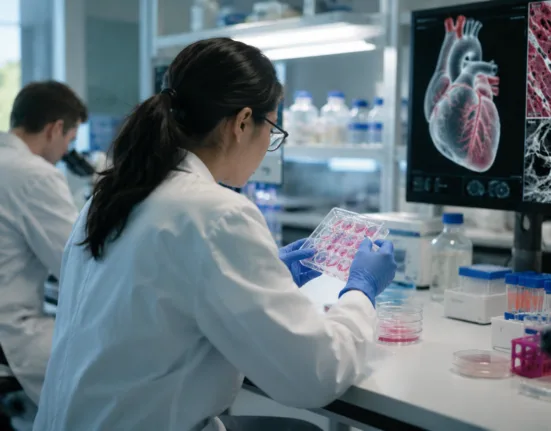
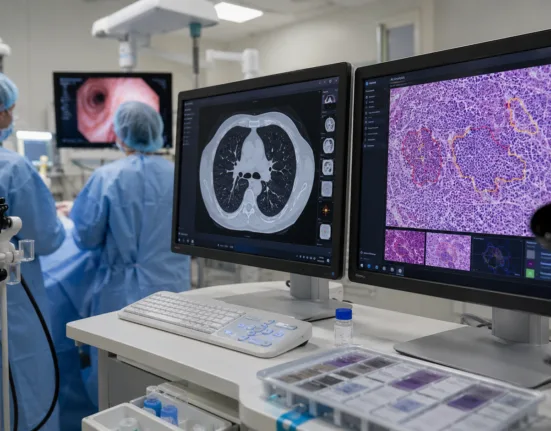
Greenstone Biosciences, Inc. has launched a strategic collaboration with Intel Corporation to combine its human induced pluripotent stem cell biobank, patient-derived organoid models and genomic datasets with Intel processors, purpose-built silicon and the Intel Health and Life Sciences AI Suite. The collaboration is intended to scale artificial intelligence-enabled drug discovery, identify patient-specific drug responses and improve the early detection of safety risks as regulators increase their support for human-relevant preclinical methods.
Why the Greenstone and Intel collaboration is about biological scale, not simply more AI
Artificial intelligence, induced pluripotent stem cells and organoids are already established parts of the modern drug discovery conversation. The genuinely important element of the Greenstone Biosciences and Intel collaboration is therefore not the appearance of another artificial intelligence partnership. Its potential significance lies in connecting genetically diverse human cellular systems with computing infrastructure capable of processing the volume and complexity of data generated by population-scale experiments.
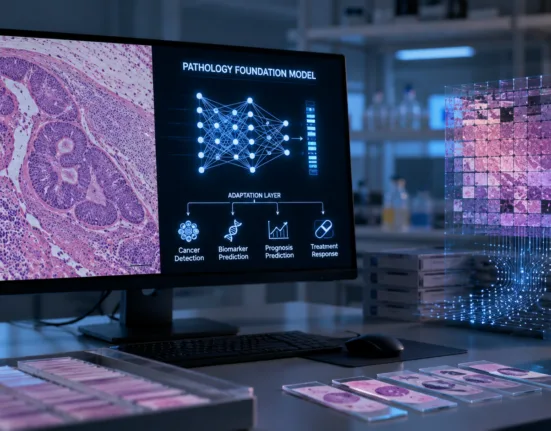
A single induced pluripotent stem cell study can produce microscopy images, electrophysiological signals, transcriptomic profiles, genomic information, protein measurements, dose-response curves and longitudinal observations. Expanding that experiment across hundreds of donors, multiple cell types, several concentrations, different exposure periods and biological replicates rapidly creates a data-management problem as much as a biological one. Traditional laboratory computing arrangements can struggle to process these workloads quickly enough to influence real-time experimental decisions.
Intel Corporation’s contribution could help Greenstone Biosciences analyse more cellular measurements in parallel, shorten the interval between an experiment and an actionable conclusion, and support artificial intelligence models that search for response patterns across genetically different donors. This may allow drug developers to move beyond asking whether an investigational compound affects an average laboratory cell and instead ask which biological profiles are associated with efficacy, toxicity or non-response.
However, greater computing capacity does not automatically produce better pharmacological evidence. A large dataset generated from inconsistent cell differentiation, immature tissues or poorly controlled assays can create highly confident but biologically misleading conclusions. The collaboration will therefore be judged not by the number of cells processed or artificial intelligence models trained, but by whether the resulting predictions remain reproducible across experiments, laboratories and future compounds.
How population-scale iPSC models could improve drug safety without replacing clinical trials
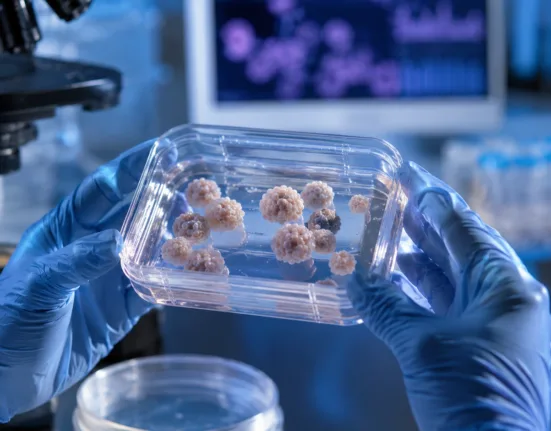
Human induced pluripotent stem cells can be generated from individual donors and differentiated into cardiomyocytes, neurons, hepatocytes and other specialised cell types. This gives researchers a renewable source of human cells that retains much of the donor’s genetic background, creating an opportunity to investigate why the same drug may be effective for one group of patients but ineffective or unsafe for another.
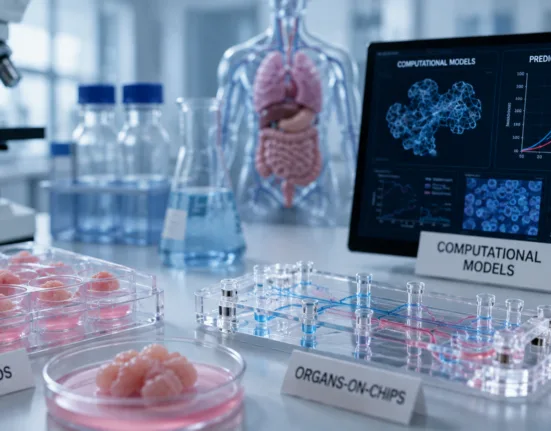
Greenstone Biosciences has built its platform around this variation. Its Cell Village and Clinical Trial in a Dish approaches are designed to test compounds across cells representing multiple donors, genetic backgrounds and disease contexts. In principle, this could expose safety liabilities or variable responses that would remain hidden in a conventional experiment relying on a single immortalised cell line.

The most immediate commercial value is likely to be in early candidate selection and safety de-risking. Pharmaceutical developers could use population-scale induced pluripotent stem cell models to compare related compounds, investigate a suspected toxicity mechanism or identify biomarkers associated with an adverse response. Removing a weak candidate before expensive toxicology programmes or clinical trials could save substantially more time and capital than attempting to rescue it after a human safety signal emerges.
Cardiac safety represents a particularly relevant use case because drug-induced arrhythmias, contractility changes and other cardiovascular effects remain important causes of development delays and product restrictions. Patient-derived cardiomyocytes can provide information about electrical activity, calcium handling and cellular contraction that may not be captured adequately by a basic ion-channel assay or a non-human model.
Yet these systems should not be described as substitutes for clinical trials. A cell culture cannot reproduce the complete interaction among drug absorption, distribution, metabolism, immune responses, hormonal signalling, organ-to-organ communication and human behaviour. Even sophisticated organoids represent selected components of human physiology rather than an entire patient.
Induced pluripotent stem cell-derived cells can also resemble immature developmental states rather than fully mature adult tissues. Differences in differentiation protocols, culture conditions, passage numbers and laboratory handling may affect the measured response. The strongest near-term role for Greenstone Biosciences’ platform is therefore likely to be the prioritisation of candidates and the generation of human-relevant evidence that complements other preclinical and clinical information.
Why Intel’s edge and purpose-built computing may change the economics of cell-based screening
The collaboration plans to use Intel processors, purpose-built silicon and the Intel Health and Life Sciences AI Suite. This suggests that the partners are considering an infrastructure model in which at least some image processing, signal analysis and artificial intelligence inference can occur close to laboratory instruments rather than requiring every raw dataset to be moved into a distant central computing environment.
Processing data nearer to the experiment could reduce transfer delays and allow researchers to identify failed cultures, unusual cellular behaviour or promising dose responses while a study is still running. It may also support more consistent deployment of analytical pipelines across instruments and research sites. For laboratories generating continuous imaging or electrophysiological data, reducing unnecessary data movement could become an important operational advantage.
Purpose-built computing may be particularly relevant when different workloads need to be handled simultaneously. Genomic analysis, high-content imaging, signal processing and artificial intelligence inference place different demands on computing systems. A platform that allocates the appropriate processing resources to each workload could improve throughput without forcing a biotechnology company to build its entire infrastructure around one type of accelerator.
Nevertheless, neither Greenstone Biosciences nor Intel Corporation has disclosed benchmark results showing how much faster or less expensive the proposed system will be than existing alternatives. The collaboration announcement did not identify the number of cell lines to be processed, the artificial intelligence model architecture, the expected screening throughput, the planned deployment timeline or the cost per experiment.
Those omissions are understandable at the start of a collaboration, but they also define the next evidence threshold. Pharmaceutical customers will want to see improvements in experiment turnaround time, cost per compound, reproducibility and predictive accuracy. Raw computing performance will matter far less than whether the integrated platform helps project teams make better development decisions.
Artificial intelligence governance will also be important. Drug developers operating in regulated environments need traceable datasets, controlled software versions, documented model changes and the ability to reconstruct how a prediction was generated. An artificial intelligence system that produces impressive correlations but lacks auditability may remain useful for exploratory research while having limited influence on regulatory submissions.
What the FDA’s 2026 NAM framework requires before human-centric models influence submissions
The timing of the collaboration is favourable because the U.S. Food and Drug Administration is creating a clearer pathway for new approach methodologies, including human-derived cell systems, organoids, computational models and other alternatives to conventional animal testing. The agency’s 2026 draft framework places particular emphasis on context of use, human biological relevance, technical characterisation and fitness for the intended regulatory purpose.
This does not amount to blanket acceptance of every organoid assay or artificial intelligence model. A method developed to rank compounds during discovery may require a different evidence package from a method intended to support a first-in-human safety decision. Regulators will expect developers to define precisely what an assay measures, when it should be used and which decisions it is capable of supporting.
Greenstone Biosciences will therefore need to show that its cellular models consistently represent the relevant human biology. Technical validation may require evidence covering assay sensitivity, specificity, repeatability, reproducibility, reference compounds, acceptance criteria and the effect of variables such as donor selection or cell maturity.
Artificial intelligence predictions will create an additional validation layer. The model must not simply distinguish compounds or donors within the dataset on which it was trained. It must perform on unseen experiments, external donor populations and compounds that were not included during model development. Prospective and blinded evaluations will carry more weight than retrospective demonstrations in which the expected outcome is already known.
Regulatory acceptance is also likely to remain endpoint-specific. A human cardiomyocyte assay could become influential for a defined cardiac safety question without replacing every element of a toxicology programme. An organoid model may provide valuable evidence about liver injury, intestinal permeability or pancreatic function while still requiring support from pharmacokinetic, clinical and other nonclinical information.
The collaboration’s regulatory opportunity is therefore real but conditional. Greenstone Biosciences and Intel Corporation can potentially build infrastructure suited to the new regulatory direction, but the platform must earn confidence one defined application at a time.
Which scientific and operational risks could keep the platform from becoming industry standard
The largest scientific risk is that biological variability becomes confused with experimental noise. Donor diversity is valuable only when researchers can distinguish a genuine genetic or disease-related response from differences caused by reprogramming, differentiation efficiency, culture conditions or batch effects.
Each induced pluripotent stem cell line requires extensive quality control. Researchers must evaluate genetic stability, identity, pluripotency, contamination, differentiation performance and the consistency of the resulting cell type. Scaling from a small collection of deeply characterised lines to a population-level platform increases the operational burden considerably.
Artificial intelligence can help detect patterns within these measurements, but it can also learn irrelevant shortcuts. A model may associate a response with the laboratory batch, imaging instrument or culture plate instead of the biological characteristic researchers intended to study. Data leakage and hidden confounding can produce excellent internal performance while failing when the model is applied to a new laboratory or patient population.
Representation is another unresolved issue. A large biobank does not automatically constitute a representative biobank. The scientific value will depend on the ancestry, age, sex, disease status, treatment history and clinical annotation of donors. Uneven representation could cause the platform to perform well for some populations while missing responses in others.
The commercial model also remains unclear. The partners have not disclosed financial terms, exclusivity provisions, named pharmaceutical customers or revenue expectations. Greenstone Biosciences could use the infrastructure to deliver research services, licence validated assays, support external drug programmes or advance internally selected candidates. Each route has different capital requirements, sales cycles and intellectual property implications.
Wet-laboratory operations may ultimately remain the limiting factor. Computing resources can analyse images and genomic datasets quickly, but cells still need to be generated, differentiated, cultured and tested under controlled conditions. Accelerating analysis could even reveal that biological production and quality control, rather than computing, are the most expensive parts of the workflow.
What pharmaceutical developers and regulators should watch as the collaboration advances
The next meaningful milestone would be a clearly defined validation study rather than another broad platform announcement. A useful programme could test a blinded panel of compounds with known human outcomes across multiple donor-derived cell lines and compare the platform’s predictions with conventional assays.
Multi-site reproducibility will be equally important. A method that works only within Greenstone Biosciences’ own laboratory may support internal research but will face barriers to broader adoption. Demonstrating that the same protocol and analytical pipeline produce comparable results at a pharmaceutical partner, contract research organisation or independent laboratory would strengthen the case for industry use.
Observers should also watch for quantitative information covering the number and diversity of donor lines, assay throughput, processing time, prediction accuracy and cost per compound. Publications describing prospective validation, regulatory interactions or the use of the system in a real development programme would signal that the collaboration is moving from infrastructure building toward practical adoption.
The most defensible interpretation is that Greenstone Biosciences and Intel Corporation have identified a strategically credible bottleneck. Human-relevant models can generate more clinically meaningful information than many traditional systems, but their complexity makes them difficult to standardise and analyse at scale. Intel Corporation can help address the computational side of that problem, while Greenstone Biosciences supplies the biological systems and translational expertise.
The alliance should not yet be treated as proof that artificial intelligence and induced pluripotent stem cells will shorten a specific drug programme or replace established testing requirements. No investigational medicine, validated regulatory endpoint or prospective performance dataset was announced. What has been created is an infrastructure partnership with the potential to make population-scale human biology more operationally accessible.
Its industry impact will depend on whether the partners can convert that infrastructure into reproducible predictions that pharmaceutical developers trust and regulators can evaluate. In drug discovery, the decisive upgrade is rarely the ability to generate more data. It is the ability to generate evidence that changes a development decision before the wrong candidate reaches patients.