Artivion, Inc. has completed its acquisition of Endospan following U.S. Food and Drug Administration premarket approval for the NEXUS Aortic Arch System. The deal brings an FDA-approved endovascular system for complex aortic arch disease into Artivion’s cardiac and vascular surgery portfolio, with a $175 million base purchase price adjusted for prior loans and up to $200 million in additional consideration tied to U.S. commercial performance.
Why does the Endospan acquisition matter for Artivion’s aortic arch strategy?
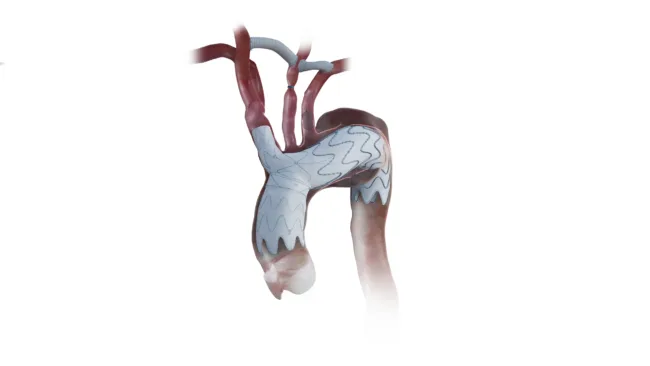
The acquisition gives Artivion direct control of a device category that sits at one of the most technically difficult points in aortic repair. Aortic arch disease has historically been dominated by open surgical repair or hybrid approaches because of the anatomy involved, the proximity to cerebral vessels, and the risk profile of patients who often have limited tolerance for major surgery. NEXUS changes the commercial conversation because it gives Artivion an off-the-shelf endovascular option for high-risk patients with chronic dissections involving the aortic arch.
That is strategically important because Artivion is not entering the segment as a general cardiovascular device company trying to buy relevance. It already has aortic disease exposure through stent grafts, surgical sealants, On-X mechanical heart valves, implantable cardiac and vascular human tissues, AMDS and ARCEVO LSA. Endospan adds a device that can sit inside a broader surgical, endovascular and hybrid treatment offering rather than operate as a standalone product looking for a channel.
The risk is that portfolio completeness does not automatically translate into procedure volume. Aortic arch repair is not a commodity category. Adoption will depend on surgeon training, anatomical suitability, centre experience, reimbursement clarity, long-term outcomes data, and confidence that an off-the-shelf system can perform consistently in a patient group where anatomy can vary widely. Artivion has bought a stronger strategic position, but it still has to convert that position into repeatable clinical use.
What does FDA PMA approval change for NEXUS in the United States?
The FDA PMA approval is the turning point because it moves NEXUS from a development and distribution opportunity into a regulated U.S. commercial asset. Premarket approval matters in high-risk implantable devices because it signals that regulators have reviewed safety and effectiveness evidence for a specific indication, not simply cleared a device through a lower-risk equivalence pathway. For NEXUS, the approved indication covers endovascular treatment of chronic dissections involving the aortic arch in patients at high risk for open surgical repair and with appropriate anatomy.
That approval gives Artivion a more defensible launch platform than a device still dependent on investigational use or overseas validation. It also narrows the initial commercial focus in a useful way. Rather than trying to position NEXUS as a universal arch solution from day one, Artivion can build around a defined high-risk population where unmet need is easier to explain to clinicians, hospitals and payers.
However, the approval also places pressure on post-market execution. PMA approval may open the door, but the U.S. launch will need disciplined case selection, real-world follow-up and credible physician education. Aortic arch interventions carry high clinical stakes, and any early safety signal, durability concern or training-related complication could slow adoption. The approval is a major milestone, but it is not the end of clinical scrutiny. In some ways, it begins the more visible phase of scrutiny.
How could NEXUS fit into a broader shift toward endovascular aortic repair?
NEXUS fits into a long-running trend in cardiovascular and vascular surgery: moving more complex repairs from open surgery toward less invasive endovascular platforms where anatomy, device engineering and operator skill allow it. That trend has already reshaped abdominal and thoracic aortic repair. The aortic arch has been harder to solve because it combines curvature, branch vessels, cerebral perfusion risk and fixation challenges in one unforgiving zone.
An off-the-shelf branched arch endograft is therefore commercially attractive because it could reduce dependence on custom-made planning for selected patients and potentially shorten the pathway between diagnosis and treatment. That matters for hospitals and clinicians because procedural predictability, inventory availability and training repeatability are central to whether a technology becomes a programme rather than a niche rescue option.
The limitation is that “off-the-shelf” does not mean “one-size-fits-all.” The FDA indication still depends on appropriate anatomy. Complex aortic disease often comes with prior repairs, vessel tortuosity, variable branch anatomy and comorbidities that can complicate device selection. Artivion’s opportunity is to make NEXUS a practical tool for specialised centres. Its challenge is to avoid overextending the product narrative beyond the patients and centres most likely to benefit.
Why does the contingent payment structure reveal a disciplined deal logic?
The acquisition structure tells its own story. Artivion is paying a substantial upfront amount, while additional consideration depends on U.S. NEXUS commercial performance over the next two years. That structure reduces some immediate risk for Artivion because the full economic value of the transaction is tied to market uptake rather than regulatory approval alone.
For Endospan’s investors, the earnout preserves upside if NEXUS gains traction in the United States. For Artivion shareholders, it creates a clearer bridge between acquisition cost and commercial proof. That is especially relevant because the company used debt funding to complete the transaction, which makes execution quality more important. Investors will likely watch not only NEXUS sales, but also gross margin contribution, launch spending, leverage effects and whether the asset can support Artivion’s broader growth narrative without straining the balance sheet.
The market signal is cautiously constructive rather than euphoric. Artivion shares were trading around $22.77 in the latest available market data, giving the medical device manufacturer a market capitalisation of roughly $1.13 billion. With a high earnings multiple and a meaningful acquisition outlay, sentiment will likely depend on whether investors see NEXUS as a platform with durable growth potential or as a specialised product with a narrow addressable base. In plain market English, Wall Street may like the strategic fit, but it will still ask for receipts.
What makes Artivion’s aortic arch portfolio more competitive after Endospan?
Artivion’s central claim is that Endospan completes a three-pronged aortic arch portfolio alongside AMDS and ARCEVO LSA. The strategic value here is not just product count. It is coverage across different clinical scenarios in a segment where physicians often need several tools rather than one dominant device.
That matters because aortic arch disease is treated through multidisciplinary decision-making involving cardiac surgeons, vascular surgeons, interventional specialists and imaging teams. A company that can support open, endovascular and hybrid workflows may gain stronger institutional relevance than a competitor selling a single technology. Artivion can now speak to arch repair as a pathway rather than a product slot.
Still, the competitive advantage will depend on integration. Sales teams must understand how NEXUS fits with existing Artivion products without confusing hospitals or overselling procedural overlap. Manufacturing and supply planning must support U.S. launch readiness. Clinical education must be rigorous enough for a device used in a high-risk anatomical region. The portfolio story is compelling, but the practical work is in converting that story into repeatable hospital adoption.
What should clinicians, regulators and investors watch next?
Clinicians will likely watch real-world outcomes first. The TRIOMPHE investigational evidence supported approval, but broader use in commercial settings will reveal how NEXUS performs across different centres, operator experience levels and patient anatomies. Stroke risk, mortality, reintervention rates, endoleak management, branch patency and durability will matter more than launch enthusiasm.
Regulators will watch post-market safety and whether the approved indication remains tightly respected. Because NEXUS addresses a high-risk population, the balance between unmet need and procedural risk will remain central. Any expansion beyond the initial indication would likely require evidence that the system can support broader use without weakening the risk-benefit case.
Investors will watch U.S. commercial execution. The earnout period creates a two-year window in which NEXUS performance becomes a visible test of the acquisition rationale. If Artivion can build adoption in specialised aortic centres, the transaction could strengthen its identity as a focused aortic disease company rather than a diversified cardiovascular device player. If launch momentum is slow, the acquisition may still be strategically logical, but the financial return could take longer to prove.
The bigger industry takeaway is that complex aortic repair is moving into a more platform-driven phase. Artivion is betting that the future of aortic arch treatment will not be defined by a single device, but by an integrated portfolio that gives clinicians more ways to manage difficult anatomy. NEXUS gives that strategy a sharper edge. The next test is whether the U.S. market is ready to adopt it at scale.