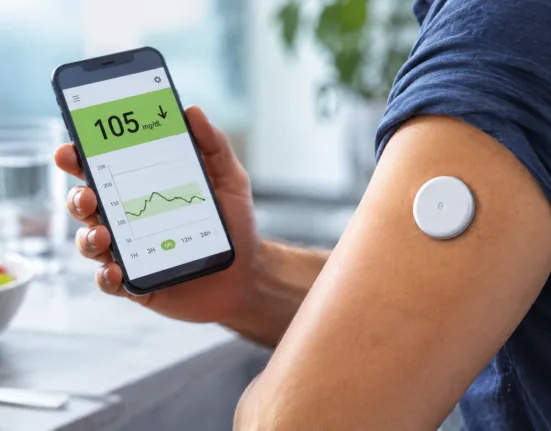
Senseonics Holdings Inc. (Nasdaq: SENS) has entered a strategic partnership with Beta Bionics to integrate the Eversense 365 implantable continuous glucose monitoring system with the iLet Bionic Pancreas, potentially extending the world’s longest-wear commercial CGM into another major automated-insulin-delivery ecosystem. The companies expect integration development to be completed during the fourth quarter of 2026 and are targeting a commercial launch during the same period, subject to required testing, validation and applicable regulatory requirements.
The distinction between partnership and regulatory clearance is important. Eversense 365 is already an FDA-cleared CGM, and iLet is an FDA-cleared automated-insulin-delivery system, but the new combined configuration must complete the necessary interoperability and regulatory work before it can be marketed as an integrated system.
For Senseonics, that process has strategic significance far beyond one partnership. The company’s main technological differentiation, a glucose sensor implanted under the skin for up to one year, has historically competed against disposable CGMs from much larger manufacturers whose sensors are deeply connected to insulin pumps and digital diabetes ecosystems.
Eversense 365 increasingly needs to compete not only on sensor duration and accuracy, but on the number of automated-insulin-delivery platforms that can use its glucose data. The Beta Bionics partnership directly addresses that ecosystem problem.
How does Eversense 365 differ from conventional continuous glucose monitors?
Most widely used CGM systems rely on small disposable sensors inserted through the skin and replaced periodically. Wear periods have progressively increased, but conventional sensors are still generally replaced many times during a year.
Eversense 365 takes a fundamentally different approach. A healthcare professional inserts a small sensor completely beneath the skin of the upper arm, where it can remain for up to 365 days.
A removable and rechargeable smart transmitter sits on the skin over the implanted sensor. It powers communication with the implant and sends glucose measurements to the user’s smartphone approximately every five minutes.
The transmitter can be removed temporarily without removing the sensor itself, allowing users to take it off when desired and reattach it later.
This creates an unusual combination: the internal sensing element can remain in place for an entire year, while the external electronic component can be removed and replaced as needed.
The trade-off is that insertion and removal require trained healthcare providers rather than simple self-application at home.
Does Eversense 365 eliminate fingerstick calibration completely?
No, and this is an important operational difference from several competing factory-calibrated CGMs.
Eversense 365 generally requires fingerstick blood glucose calibration once weekly after Day 14. Fingerstick measurements are also required when symptoms do not match the CGM reading and in certain other circumstances defined in the product instructions.
That calibration burden is dramatically lower than earlier generations of implantable CGM but remains greater than sensors that require no routine calibration.
Whether patients prefer one provider-based insertion plus weekly calibration or repeated self-insertion of disposable sensors depends on individual priorities.
Some may value avoiding adhesive sensor changes every one or two weeks, while others may prefer not to undergo an office insertion procedure.
This is why automated-insulin-delivery compatibility becomes so important. Sensor duration alone does not determine CGM choice for people who rely on closed-loop insulin systems.
Why could the iLet integration materially expand the addressable population for Senseonics?
Automated-insulin-delivery systems use CGM readings continuously to determine insulin doses. A sensor that cannot communicate with a patient’s preferred pump may effectively be excluded from consideration regardless of its other advantages.
Beta Bionics’ iLet Bionic Pancreas is differentiated by a highly automated dosing approach intended to reduce the burden of conventional pump programming. Users do not manually calculate every insulin dose in the same way required by traditional therapy.
Integrating Eversense 365 gives existing and prospective iLet users another CGM option while giving Senseonics access to an installed population of automated-insulin-delivery users.
Beta Bionics says more than 40,000 people have used its current automated dosing technology, providing a meaningful potential pool for integration.
The partnership is particularly complementary from a device-burden perspective. Beta Bionics emphasizes automation to reduce daily decision making, while Senseonics emphasizes reducing sensor replacements.
Combining those characteristics creates a system designed around minimizing recurring user tasks rather than merely improving one technical parameter.
Could a one-year CGM improve automated-insulin-delivery reliability?
In theory, reducing sensor-change frequency could remove one recurring source of interruption. Every conventional CGM replacement creates a period involving sensor insertion, startup, adhesion and potential troubleshooting.
An implanted sensor avoids repeated insertion of the sensing element throughout the year.
Continuity matters for automated insulin delivery because a pump depends on reliable CGM data. When glucose information is unavailable, automated features can be restricted or temporarily interrupted depending on the system.
Long wear does not guarantee uninterrupted data for 365 days. Transmitter charging, calibration, connectivity and sensor performance still need to be managed.
The system’s actual value therefore depends on real-world reliability rather than nominal wear duration alone.
Senseonics has been building that evidence. The company has reported real-world Eversense 365 performance including use with another automated-insulin-delivery system, creating useful experience before the planned iLet integration.
How does iLet’s dosing model fit with Eversense 365?
The iLet Bionic Pancreas is designed to autonomously determine insulin dosing based on CGM data and adaptive algorithms. It requires substantially less manual setup than many conventional pump systems and does not rely on traditional carbohydrate counting for every meal, although users must remain carbohydrate aware.
This makes continuous sensor input central to the system. The pump’s dosing algorithm needs frequent glucose information to adapt insulin delivery appropriately.
Eversense 365 provides readings approximately every five minutes, matching the high-frequency data environment required by automated systems.
Beta Bionics is simultaneously developing its next-generation 3D Intelligence algorithm and Mint patch pump, which could eventually create additional integration opportunities if the companies extend their partnership.
The current announcement specifically concerns Eversense 365 with iLet, however, and future compatibility with other Beta Bionics platforms should not be assumed unless separately developed and authorized.
Why is Senseonics pushing multiple automated-insulin-delivery integrations now?
CGM markets increasingly operate as ecosystems rather than standalone device categories. Dexcom and Abbott Laboratories have become dominant partly because their sensors connect with pumps, smart pens, smartphone applications and other digital-health platforms.
Senseonics historically lacked comparable scale.
Eversense 365 materially improves the company’s hardware proposition by extending implant duration to a full year, but commercial adoption can remain constrained if patients must choose between the sensor and their preferred pump.
The company has therefore prioritized interoperability.
Eversense 365 already has experience integrating with the twiist automated-insulin-delivery platform. Adding iLet expands the number of pathways through which patients can pair implantable glucose monitoring with automated dosing.
Every additional pump integration reduces the risk that Eversense is confined to a niche of CGM-only users.
This could become particularly important for people with type 1 diabetes, where automated insulin delivery is increasingly becoming the preferred technology-driven management approach.
Is Eversense 365 already gaining commercial traction?
Senseonics’ financial results suggest commercial momentum has improved substantially.
Second-quarter 2026 revenue reached $14.5 million, approximately 120% higher than the $6.6 million reported one year earlier.
U.S. revenue increased more than 150% to $12.6 million, while international revenue rose more modestly to $1.9 million.
The company also improved gross margin to approximately 59% and increased full-year 2026 revenue guidance to $62 million to $66 million from the previous range of $60 million to $64 million.
Management attributed the growth partly to Eversense 365 demand and the company’s transition to direct U.S. commercialization.
That shift matters because Senseonics previously relied heavily on a commercialization partner. Controlling sales internally allows the company to capture a larger portion of revenue but also increases selling and administrative expenses.
Second-quarter operating loss widened to approximately $36 million as the company invested heavily in commercialization and development, showing that rapid revenue growth has not yet translated into profitability.
Why hasn’t the Beta Bionics partnership produced a huge SENS stock reaction?
SENS closed September 15 at approximately $8.88, up only about 0.5% for the session after rising around 1.5% on September 14.
That relatively restrained reaction likely reflects several factors.
The integration is strategically useful but remains subject to development, validation and regulatory requirements. Investors cannot yet treat every iLet user as an Eversense customer.
Senseonics shares have also already risen significantly from earlier levels, with the stock trading near the upper half of its 52-week range during September.
The commercial impact of pump integration generally develops gradually. Physicians need to recommend the configuration, payers need to cover the sensor and insertion, and existing users may switch only when their current CGM supply cycle or treatment preference changes.
The stock therefore may respond more strongly to measurable patient additions and revenue than to partnership announcements alone.
What role do provider insertion and reimbursement play in adoption?
Eversense 365’s greatest technical distinction also creates its biggest workflow difference.
A healthcare professional must insert the sensor through a minor procedure and later remove it. Conventional CGMs can generally be applied by the patient at home.
Senseonics therefore needs enough clinicians trained and willing to perform insertions. Geographic gaps in trained providers can create an access problem even if insurance coverage is available.
Reimbursement has to compensate appropriately for both the device and procedure.
A one-year sensor may reduce the number of supply transactions compared with disposable CGMs, but reimbursement models built around frequent sensor replacement do not necessarily translate automatically to implantable technology.
The company has been expanding provider networks and direct-to-consumer acquisition to address those barriers.
Automated-insulin-delivery partnerships can help because pump users and endocrinologists already operate within highly engaged diabetes-care networks where technology adoption is common.
Could Senseonics ultimately challenge Dexcom and Abbott?
Scale remains dramatically different.
Dexcom and Abbott Laboratories sell CGM products to millions of people globally and have enormous manufacturing, payer and distribution networks.
Senseonics does not need to displace either company broadly for Eversense 365 to become commercially meaningful. Even a relatively small percentage of the expanding CGM market could represent substantial revenue growth from the company’s current base.
Its differentiation is clear: no mainstream disposable CGM currently offers one implanted sensor designed to remain in place for an entire year.
The competitive question is whether enough patients value that difference strongly enough to accept provider insertion and periodic calibration.
Integration with iLet improves the proposition because it removes one potential reason not to choose Eversense.
Senseonics could therefore build a defensible segment around people who strongly value long sensor duration rather than trying to win every CGM user.
What should SENS investors and diabetes-device companies watch next?
The first milestone is completion of technical integration and required validation with Beta Bionics.
Any regulatory submission or clearance associated with the combined system will be important because commercial launch depends on satisfying applicable requirements.
The companies are targeting the fourth quarter of 2026, leaving a relatively short execution window.
Early utilization following launch will then matter more than partnership language. Investors should watch whether iLet integration meaningfully accelerates new Eversense 365 patient starts.
Senseonics’ next quarterly revenue update will provide another useful measure of underlying growth even before the full partnership impact becomes visible.
Gross margin and operating expenses deserve equal attention because the company needs to show that direct commercialization can eventually produce operating leverage.
Eversense 365 already solves one problem that conventional CGM manufacturers have spent years addressing incrementally: sensor wear time. One implanted sensor can provide glucose measurement for up to a year.
The harder commercial problem has been ecosystem access.
By adding Beta Bionics’ iLet to its automated-insulin-delivery relationships, Senseonics is beginning to address that weakness. The success of the strategy will not be measured by the number of partnership announcements but by whether people using insulin pumps increasingly choose a one-year implantable CGM when they are finally given that option.