OrganaBio, LLC has acquired substantially all operating assets of Excellos Inc., adding the San Diego-based cell therapy CDMO’s manufacturing and development capabilities to its growing advanced therapy services platform. The transaction expands OrganaBio’s contract testing, development and manufacturing footprint across the United States at a time when autologous and allogeneic cell therapy developers are under growing pressure to secure reliable starting materials, cGMP manufacturing capacity and geographic redundancy.
Why OrganaBio’s Excellos acquisition changes the cell therapy CDMO conversation beyond geography
The most important part of the OrganaBio and Excellos transaction is not simply that it creates a coast-to-coast cell therapy CDMO presence. The more meaningful shift is that OrganaBio is trying to compress several fragile parts of the advanced therapy supply chain into a more integrated service model. For cell therapy developers, especially those moving from translational research into early clinical development, the pain point is rarely one isolated service. It is the friction between donor sourcing, cell processing, analytical testing, process development, cryopreservation, fill and finish, and eventual clinical manufacturing.
That matters because cell therapy programs can stumble before efficacy is even tested properly. Variability in starting material, inconsistent cell characterization, logistics delays, batch failure, limited cleanroom access and tech transfer complexity can all create risk. A CDMO with operations on both U.S. coasts can, in theory, reduce some of that exposure by allowing developers to align clinical trial sites, donor access, processing timelines and manufacturing execution more efficiently.
However, geographic breadth alone does not guarantee manufacturing resilience. The unresolved question is whether OrganaBio can integrate Excellos’ San Diego operations without creating new quality, systems, or customer transition complexity. In cell therapy manufacturing, scale is useful only when quality systems, documentation practices, batch records, analytical methods and client communication are harmonized. A coast-to-coast map looks attractive, but sponsors will judge the platform by execution consistency rather than location count.
How the San Diego site strengthens OrganaBio’s position in autologous and allogeneic cell therapy manufacturing
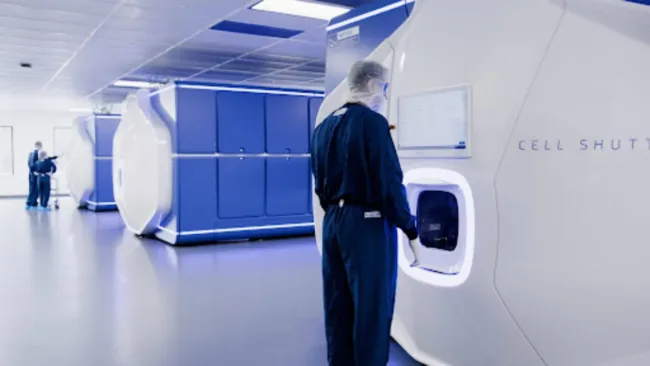
Excellos brings a purpose-built San Diego facility with ISO 7 cGMP cleanroom suites supporting autologous and allogeneic cell therapy manufacturing, cell isolation, enrichment, expansion and fill and finish. This is commercially relevant because the cell therapy market is moving in two demanding directions at once. Autologous therapies require precise, patient-specific manufacturing workflows, while allogeneic approaches require scalable, standardized production with strong control over donor material and batch reproducibility.
For OrganaBio, the San Diego site adds more than capacity. It extends the U.S.-based biotech service provider’s ability to support developers that need West Coast proximity, particularly companies clustered around California’s cell and gene therapy ecosystem. San Diego also gives OrganaBio a stronger position in a region with deep academic, biotech and translational medicine activity, where early-stage developers often need flexible manufacturing support before they are ready for large-scale commercial partnerships.
The limitation is that early and mid-stage cell therapy clients often need more than facility access. They need process maturity. Programs involving CAR-T, CAR-NK, tumor-infiltrating lymphocytes, T-cell receptor therapies, gamma delta cells and other immune cell approaches can differ sharply in culture conditions, expansion dynamics, release testing, potency assays and manufacturing timelines. OrganaBio’s challenge will be to convert Excellos’ infrastructure and team continuity into a repeatable operating model that can serve multiple therapeutic modalities without diluting technical focus.
What the deal reveals about starting material control as a competitive advantage in cell therapy
Cell therapy manufacturing begins with biology, not stainless steel. That is why OrganaBio’s existing starting material platform is strategically important in this acquisition. The Miami-headquartered advanced therapy services provider already operates around adult leukapheresis through HemaCenter, birth tissue and cord blood sourcing through GaiaGift, cGMP cleanrooms, process development, quality control, analytical testing, peripheral blood mononuclear cell isolation and cryopreservation.
This combination gives OrganaBio a stronger narrative than a conventional CDMO capacity expansion. In cell therapy, the quality of donor material can influence downstream manufacturing performance, product consistency and clinical development risk. Developers of allogeneic products, in particular, are increasingly focused on donor screening, HLA typing, immune cell characterization and material traceability because early variability can magnify later in the production process.
Still, control over starting material is not a complete answer. Developers and regulators will continue to scrutinize comparability, chain of identity, chain of custody, release assays, potency measures and contamination risk. The deeper OrganaBio moves into integrated manufacturing, the more it will need to show that its upstream sourcing advantages translate into lower failure rates, cleaner tech transfer, reliable lot release and stronger clinical supply continuity. The acquisition creates a platform opportunity, but the burden of proof will sit in operational data.
Why bicoastal CDMO capacity matters as cell therapy developers rethink supply chain risk
The COVID-era stress test, the growth of decentralized clinical trials and the rising complexity of advanced therapies have made supply chain resilience a boardroom issue for biotech developers. For cell therapies, where viable material may be time-sensitive and handling requirements are strict, manufacturing location can influence logistics risk, sample integrity and trial site coordination. A CDMO with East Coast and West Coast operations can offer sponsors more flexibility when designing clinical trial support models.
OrganaBio’s expanded footprint now spans Miami, San Francisco, Irvine and San Diego, giving it a broader U.S. operating base than many niche service providers. This could appeal to developers that want a single partner for starting material, clinical cell processing, cryopreservation, analytical testing and manufacturing rather than managing multiple specialized vendors. In a funding environment where many biotechs are trying to conserve cash and reduce execution drag, vendor consolidation can become a practical advantage.
The risk is that consolidation can also create concentration exposure. A sponsor may prefer one integrated partner, but that partner must prove that each location operates to the same standard. Any inconsistency across quality systems, staffing depth, deviation handling or project management could undermine the intended benefit of a single relationship. In other words, OrganaBio’s bicoastal structure could reduce risk for developers, but only if the integration is disciplined enough to avoid creating new operational bottlenecks.
How Excellos Labs could influence customer continuity and integration risk after the transaction
The formation of Excellos Labs, LLC to manage San Diego operations suggests that OrganaBio is preserving operational continuity rather than absorbing the assets into a single undifferentiated corporate structure immediately. That is a sensible approach in cell therapy CDMO transactions because existing customer programs may depend on familiar scientific teams, validated workflows and established project knowledge. Disruption during integration can be costly when client programs are tied to clinical timelines.
Retaining the core Excellos team is especially important because cell therapy manufacturing depends heavily on tacit expertise. Cleanrooms, equipment and quality manuals matter, but experienced operators, process development scientists and quality personnel often determine whether a program progresses smoothly. In early-stage advanced therapy manufacturing, where processes are still evolving, team continuity can help sponsors avoid avoidable delays.
However, the Excellos Labs structure also raises a strategic question. OrganaBio will need to balance autonomy with standardization. Too much separation could limit the value of integration, while too much centralization could disrupt the capabilities that made Excellos attractive in the first place. Industry observers will likely watch whether San Diego becomes a true node in a unified OrganaBio platform or remains largely a regional bolt-on with limited cross-site leverage.
What this means for smaller biotechs competing for advanced therapy manufacturing support
For emerging biotechs, the OrganaBio and Excellos deal points to a broader market shift. Cell therapy developers increasingly want CDMO partners that can support them earlier, stay with them longer and reduce the number of handoffs across the development lifecycle. That is particularly important for companies working on complex immune cell therapies, where moving from research-grade processes to clinical-grade manufacturing can expose weaknesses in documentation, controls and analytics.
A combined OrganaBio and Excellos platform could be attractive to smaller developers that do not yet have internal manufacturing infrastructure. It may allow them to access donor material, cell processing, process development, cGMP manufacturing and analytical services without building a fragmented supplier network. This is commercially meaningful because capital efficiency has become a survival issue across biotech, and manufacturing strategy can influence fundraising credibility as much as clinical rationale.
The counterpoint is that smaller biotechs must remain cautious about dependency. A broader CDMO can simplify execution, but it can also increase switching costs if timelines, pricing, technical priorities or capacity allocation change. Developers will need to assess not just whether OrganaBio has the right capabilities, but whether it can offer transparent timelines, flexible project design and credible contingency planning. In advanced therapies, a vendor relationship is not a procurement decision. It can become a strategic development choice.
Why regulators and sponsors will focus on quality systems rather than acquisition scale
From a regulatory and sponsor oversight perspective, the acquisition’s success will be measured through quality execution. Cell therapy products often involve individualized or highly variable biological materials, which makes process control, traceability and documentation central to regulatory confidence. A larger footprint can support more programs, but it also multiplies the need for consistent training, deviation management, environmental monitoring and quality oversight.
For sponsors preparing investigational new drug applications or advancing clinical-stage programs, CDMO credibility depends on whether manufacturing processes can withstand regulatory scrutiny. The ability to support autologous and allogeneic programs is commercially valuable, but regulators will care about chain of identity, sterility assurance, release criteria, comparability strategies and evidence that process changes are scientifically justified.
That creates both an opportunity and a test for OrganaBio. If the expanded platform can demonstrate consistent quality across sites, the Excellos acquisition could strengthen its standing among developers seeking a more integrated advanced therapy partner. If integration creates uneven practices or delays, the transaction could become another reminder that cell therapy CDMO expansion is easier to announce than to operationalize.
What industry watchers are likely to monitor as OrganaBio scales the combined platform
The next phase will likely be judged by customer retention, new program wins, cross-site utilization and evidence that the combined platform can support programs across different stages of development. Industry watchers will also look for whether OrganaBio uses the acquisition to deepen its role in allogeneic manufacturing, where starting material control and donor characterization can be strategic differentiators.
The competitive backdrop is also important. Larger CDMOs and specialized cell therapy manufacturers are all trying to position themselves around capacity, automation, analytics and regulatory readiness. OrganaBio’s advantage may lie in pairing starting material access with manufacturing and testing services, but it will need to show that this model can compete with larger platforms that offer global scale or more established late-stage manufacturing track records.
The Excellos asset acquisition is therefore best viewed as a platform-building move rather than a simple expansion deal. It gives OrganaBio a stronger U.S. footprint, a deeper West Coast presence and a broader service proposition for cell therapy developers. The strategic question is whether that combination can become a durable operating advantage in a market where manufacturing precision, biological variability and clinical timelines leave little room for nice-looking but loosely integrated capacity.