Ironfist Therapeutics, a Redwood City, California-based preclinical-stage biotechnology company, announced on October 14, 2026, that its investigational radiopharmaceutical 177Lu-Tamrada more than doubled survival when combined with anti-PD-1 immunotherapy in a mouse model of checkpoint-resistant pancreatic cancer. The findings, scheduled for presentation at the European Association of Nuclear Medicine’s 2026 congress in Vienna, support the company’s strategy of targeting immunosuppressive cells within tumors rather than relying on a conventional cancer-cell surface antigen. The study used an orthotopic syngeneic pancreatic cancer model, meaning the tumors were established in an anatomically relevant site within immunologically compatible animals. The result is a preclinical proof of concept, not evidence that Tamrada prolongs survival in patients with pancreatic cancer.
The company is also advancing a companion copper-64 imaging agent intended to identify tumors that accumulate Tamrada before administering the therapeutic lutetium-177 formulation. Ironfist plans to begin first-in-human imaging studies during the first quarter of 2027, followed by therapeutic investigation in patients whose tumors demonstrate suitable uptake. Separately, it reported a 240-fold safety margin from preclinical radiation dosimetry calculations for 64Cu-Tamrada relative to its highest proposed initial human activity of 200 megabecquerels. The margin concerns estimated radiation exposure for the imaging candidate and should not be interpreted as proof of human safety or applied automatically to the lutetium-177 treatment.
The announcement also leaves several questions unanswered. Ironfist has not disclosed the exact median survival times, animal numbers or complete statistical analysis underlying the reported more-than-twofold improvement. It has not announced human enrollment, clinical response data or regulatory authorization to market either product. The forthcoming clinical programme will therefore need to establish whether the tumor-targeting behavior observed in animals can be reproduced safely and meaningfully in patients.
Why is pancreatic cancer resistant to many immune checkpoint treatments?
Pancreatic ductal adenocarcinoma is an aggressive malignancy that frequently develops within a dense and biologically complex tumor environment. The surrounding tissue contains cancer-associated fibroblasts, immune cells, blood vessels and extracellular matrix components that can influence the movement and activity of anticancer treatments. These features contribute to the difficulty of treating pancreatic cancer, particularly when the disease is diagnosed at an advanced stage.
Immune checkpoint inhibitors have transformed treatment for several cancers by removing inhibitory signals that limit T-cell activity. However, most pancreatic cancers have not demonstrated comparable sensitivity to anti-PD-1 or anti-PD-L1 treatment alone. Their tumor environments often contain relatively few activated cytotoxic T cells and substantial populations of cells that suppress immune responses.
Tumor-associated macrophages are among the immune populations implicated in this process. Depending on their biological state, these cells can support inflammatory antitumor activity or contribute to immune suppression, tissue remodeling and tumor progression. Ironfist is investigating whether selectively eliminating immunosuppressive macrophages can make otherwise resistant tumors more vulnerable to checkpoint blockade.
The underlying hypothesis is that modifying the tumor environment may enable existing immunotherapies to work more effectively. This differs from introducing another checkpoint inhibitor directed at a conventional immune receptor. Nevertheless, pancreatic cancer resistance involves multiple mechanisms, meaning that changing macrophage populations alone may not be sufficient in every tumor.
How does 177Lu-Tamrada target tumor-associated macrophages?
Tamrada uses a hydroxyl dendrimer nanomedicine platform originating from research at Johns Hopkins University. Dendrimers are highly structured, branched molecules whose physical and chemical characteristics can be engineered for particular delivery applications. Ironfist’s formulation is designed to accumulate in tumor-associated macrophages without requiring an added ligand that binds a specific cancer-cell antigen.
According to the company, the nanomedicine can reach activated immune cells within tumors through biological uptake mechanisms associated with those cells. The approach is intended to distinguish tumor-associated macrophages from other tissues through differences in local access and cellular behavior. However, the claim of selective tumor targeting is based on preclinical evidence and must be confirmed through human biodistribution studies.
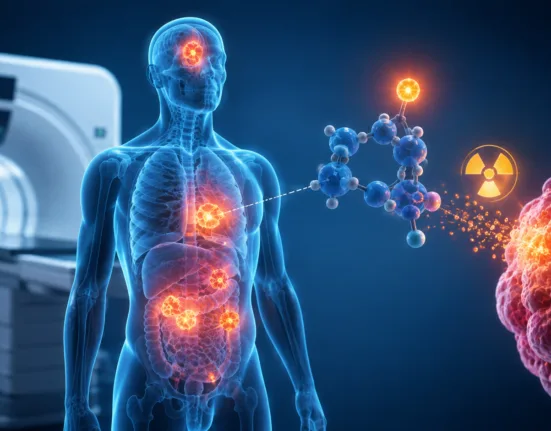
The therapeutic formulation carries lutetium-177, a radioactive isotope that emits beta particles capable of damaging cells through radiation exposure. By delivering radiation to macrophages within the tumor environment, Ironfist aims to remove or reduce populations contributing to immune suppression. Radiation may also affect nearby malignant cells through a local bystander effect, potentially broadening the impact beyond the cells that initially accumulate the drug.
This mechanism differs from radiopharmaceutical treatments that use antibodies or small molecules to recognize proteins expressed directly on cancer cells. It may offer a route to treating tumors that do not express a conventional radioligand target. However, the absence of a specific targeting ligand does not automatically establish that accumulation is sufficiently selective or consistent across different cancer types.
What does the reported doubling of survival actually establish?
The central experiment evaluated 177Lu-Tamrada together with anti-PD-1 treatment in an orthotopic pancreatic cancer model resistant to checkpoint inhibition. Ironfist reported that survival with the combination exceeded twice that observed with anti-PD-1 treatment alone. The finding suggests that modifying macrophage populations may alter treatment response in an experimental setting where checkpoint therapy has limited activity.
The comparator is important. The reported improvement was measured against anti-PD-1 therapy alone, not against every established pancreatic cancer treatment or an untreated population. The announcement also does not provide the absolute survival times, making it impossible to determine from the disclosure how many additional days the treated mice lived.
A doubling of survival in an animal model can be scientifically encouraging without establishing a comparable benefit in people. Mouse tumors differ from human cancers in their development, immune biology, size and treatment exposure. Even anatomically relevant models cannot fully reproduce the genetic diversity and clinical characteristics of pancreatic ductal adenocarcinoma.
Ironfist also reported localized evidence of double-strand DNA damage in the tumor environment, supporting the intended radiation mechanism. However, the company’s description of limited effects on healthy tissue does not establish a complete safety profile. Additional toxicology, organ dosimetry and human exposure studies will be necessary before claims of selective clinical activity can be evaluated.
Why is combining Tamrada with anti-PD-1 therapy scientifically interesting?
The proposed combination attempts to address two different obstacles to antitumor immunity. Anti-PD-1 treatment acts on a signaling pathway that can limit T-cell activity, while Tamrada is designed to reduce macrophage populations contributing to immune suppression. If both mechanisms operate as intended, the treatment environment may become more favorable for an effective immune response.
The approach differs from simply combining two medicines that attack cancer cells independently. Ironfist is investigating whether a radiopharmaceutical can change the conditions under which an existing immunotherapy operates. This could make the combination relevant to cancers that show resistance to checkpoint blockade despite the presence of potentially recognizable tumor antigens.
However, macrophages perform diverse functions and are not uniformly harmful. Some contribute to antigen presentation, tissue repair and beneficial antitumor responses. A treatment that removes macrophage populations indiscriminately could produce biological consequences different from those intended by the developer.
The critical research question is therefore whether Tamrada can preferentially affect suppressive macrophages while preserving enough beneficial immune activity. Understanding the relationship between radiation dose, macrophage depletion and T-cell activation will be important during clinical development. The current animal findings support further investigation but do not establish the optimal treatment combination in patients.
What does the copper-64 Tamrada imaging programme add to the development strategy?
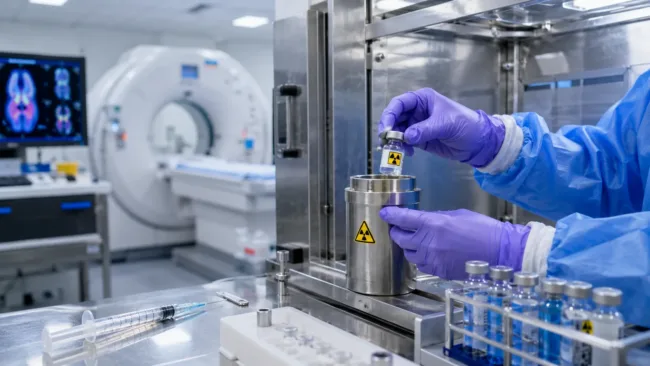
Ironfist is developing 64Cu-Tamrada as a diagnostic companion to the lutetium-177 therapeutic formulation. Copper-64 is a positron-emitting radionuclide that can be used for PET imaging, allowing investigators to visualize where an administered radiotracer accumulates. This could help identify tumors that take up the Tamrada nanomedicine before patients receive the therapeutic isotope.
The approach follows a theranostic strategy in which imaging and treatment are linked through a related targeting platform. In principle, imaging could help distinguish patients whose tumors exhibit substantial uptake from those less likely to receive adequate tumor-directed radiation. It may also provide information needed to plan therapeutic activity and estimate radiation exposure.
Ironfist’s upcoming EANM poster will present preclinical dosimetry findings for the copper-64 formulation. The company reported that red marrow was identified as the dose-limiting organ, with an estimated 240-fold safety margin relative to the highest proposed first-in-human administered activity of 200 MBq. This calculation provides a rationale for further clinical planning but remains dependent on the methods and assumptions used to translate preclinical exposure into projected human radiation doses.
A particularly important limitation is that the calculation applies to the imaging agent. Lutetium-177 and copper-64 have different radioactive properties and may produce different absorbed-dose profiles even when attached to related delivery molecules. Safety findings from one radiolabeled formulation cannot be assumed to establish the safety of the other.
The first human imaging study will need to evaluate biodistribution, clearance, organ exposure and the variability of tumor uptake. Those results should help determine whether the proposed imaging-based patient selection strategy is feasible.
How does the latest pancreatic cancer result build on Ironfist’s earlier work?
Ironfist previously investigated Tamrada in models of triple-negative breast cancer and prostate cancer. In October 2025, the company presented preclinical findings involving anti-PD-1-resistant 4T1 breast cancer models, including observations of tumor-directed uptake and antitumor activity. Earlier studies also examined tumors lacking prostate-specific membrane antigen, reflecting an interest in cancers not readily addressed through conventional antigen-targeted radiopharmaceutical approaches.
The breast cancer research included a reported tumor uptake measurement of approximately 41% of injected dose per gram for the copper-64 formulation under the investigated experimental conditions. That figure describes a specific laboratory biodistribution observation rather than a general expected uptake level in human cancers. It also should not be interpreted as an established clinical radiation-delivery result.
The pancreatic cancer findings extend the experimental evidence into another malignancy with substantial immune resistance. However, demonstrating activity in multiple animal models does not establish that the delivery system is effective across all solid tumors. Different cancers contain varying macrophage populations, vascular characteristics and immune signaling patterns.
Ironfist describes Tamrada as a potentially tumor-agnostic platform because it does not depend on one tumor-cell antigen. That is a development objective rather than a validated clinical indication. The practical breadth of the approach will depend on whether different human tumors exhibit sufficient and reproducible uptake.
What safety questions must be resolved before therapeutic dosing in humans?
Radiopharmaceutical development requires an assessment of both the biological effects of the carrier molecule and the radiation dose delivered to tissues. Even when tumor accumulation is favorable, circulating or cleared radioactive material may expose organs involved in metabolism and elimination. For Tamrada, red marrow, kidneys and other organs will require appropriate dosimetry and toxicity evaluation.
The company describes renal and biliary clearance pathways for its nanomedicine platform. However, the extent and duration of organ exposure may vary according to isotope, administered activity and patient characteristics. Human imaging studies can help establish those relationships more directly than animal experiments.
Another question concerns the biological consequences of targeting macrophages. These cells contribute to normal immune defense and tissue maintenance as well as tumor-associated processes. Investigators will need to assess whether treatment causes clinically significant immune dysfunction or other effects outside the tumor environment.
The use of anti-PD-1 treatment alongside a radiopharmaceutical also creates a need to monitor combination-related adverse events. Radiation exposure and immune activation can each produce toxicities, and their interaction may not be predictable from single-agent studies. No human safety findings for the combination were announced with the October results.
What must Ironfist demonstrate before Tamrada can become a clinical oncology treatment?
The immediate planned milestone is first-in-human investigation of 64Cu-Tamrada during the first quarter of 2027. The study is intended to examine where the imaging agent accumulates and whether PET can identify tumors suitable for subsequent radiopharmaceutical treatment. Ironfist has not announced completed human dosing or demonstrated a clinically validated uptake threshold.
If the imaging programme supports further development, the company plans to investigate 177Lu-Tamrada in patients with suitable tumor uptake. Early therapeutic studies will need to establish tolerability, dosimetry, appropriate dosing and preliminary antitumor activity. Any combination with checkpoint inhibition will also require a clinical strategy capable of assessing additive effects and treatment-related risks.
The platform may eventually support additional radioactive isotopes, including alpha emitters such as actinium-225. These possibilities reflect chemical and technological flexibility but remain separate from demonstrated clinical performance. Each radiolabeled version would require product-specific development and safety evaluation.
Ironfist’s October announcement presents an intriguing experimental strategy for overcoming resistance in a difficult cancer. The reported more-than-twofold survival improvement in mice and preliminary copper-64 dosimetry support continued research, but neither finding establishes human efficacy. The decisive next step will be demonstrating selective tumor uptake and acceptable radiation exposure in people, followed by evidence that macrophage-directed treatment can produce meaningful and durable anticancer effects.