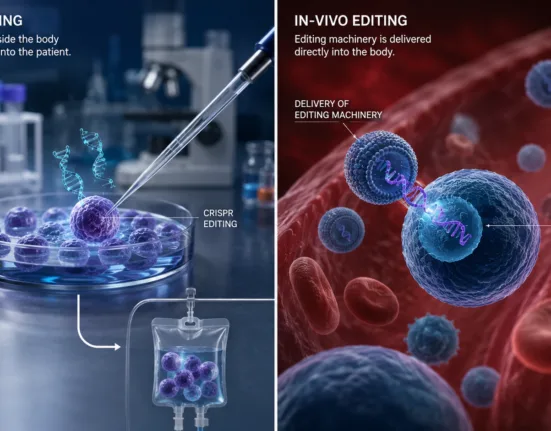
Non-viral gene therapies are moving from a technical workaround to a strategic priority as drug developers confront safety, redosing, manufacturing and cost challenges tied to viral vector-based genetic medicines. The shift is not a rejection of adeno-associated virus vectors, lentiviral vectors or retroviral systems, which remain central to several approved and investigational therapies. Instead, the field is entering a more selective phase in which delivery technology is becoming as important as the genetic payload itself. Lipid nanoparticles, electroporation, polymeric nanoparticles, plasmid DNA systems, GalNAc-conjugated delivery and ex vivo genome editing platforms are now being assessed not only for scientific elegance, but for whether they can make genetic medicine safer, repeatable and scalable.
The momentum has intensified after regulatory scrutiny around viral vector safety. The United States Food and Drug Administration reported in July 2025 that it had received three reports of fatal acute liver failure following treatment with Sarepta Therapeutics’ AAVrh74 gene therapies, with the agency saying the deaths appeared to have been caused by the products as a result of acute liver failure. The agency later took action on a boxed warning and revised indication for Elevidys, the adeno-associated virus vector-based Duchenne muscular dystrophy therapy, following fatal liver injury reports. These events have sharpened a long-standing question in genetic medicine: whether one-time treatment should always mean viral delivery, especially when systemic dosing, immune activation and long-term monitoring remain unresolved clinical and regulatory burdens.
Why are non-viral gene delivery platforms becoming strategically important in 2026?
The core attraction of non-viral gene delivery is that it may decouple genetic medicine from some of the structural limitations of viral vectors. Viral vectors have proven that durable genetic modification can be clinically meaningful, but they can bring constraints around immune response, cargo capacity, pre-existing neutralising antibodies, complex manufacturing and limited redosing options. Non-viral systems, by contrast, can often be designed synthetically, modified chemically, manufactured with more flexible processes and adapted for transient or repeatable delivery depending on the therapeutic goal.
Scientific reviews published in recent years have consistently framed lipid nanoparticles, liposomes, polymeric nanoparticles and other nanotechnology-based systems as major non-viral delivery categories because they can carry nucleic acids without relying on a viral capsid. That matters commercially because genetic medicine is no longer confined to ultra-rare monogenic disorders. Developers want to move into larger patient populations, including cardiovascular disease, metabolic disease, oncology, immunology and central nervous system disorders. In those settings, the tolerance for unpredictable severe toxicity is lower, payer pressure is higher and manufacturing reproducibility becomes less of a technical footnote and more of a launch-limiting factor.

The catch is that non-viral does not automatically mean low-risk. Lipid nanoparticles can trigger infusion reactions, liver exposure, inflammatory responses or tissue-distribution challenges. Electroporation can be highly useful in ex vivo cell editing but still depends on complex cell collection, conditioning and reinfusion workflows. Plasmid and DNA-based systems can face delivery efficiency and durability limitations. The more accurate takeaway is that non-viral platforms shift the risk profile rather than magically deleting it, which is very biotech of them: the problem does not vanish, it changes clothes.
How viral vector safety concerns are changing the regulatory and development calculus
The viral vector safety debate is not new, but it has become more commercially consequential as more gene therapies reach market. The FDA’s cellular and gene therapy guidance page shows the breadth of regulatory attention now surrounding potency assurance, manufacturing changes, comparability, long-term safety follow-up and clinical trial design for small populations. The agency’s guidance infrastructure reflects a sector in which regulators are no longer judging gene therapy only by whether it can express a transgene, but by whether sponsors can monitor, explain and control the full lifecycle of clinical risk.
For adeno-associated virus-based therapies, liver toxicity has become one of the most watched safety concerns, especially in systemic neuromuscular applications that may require high vector doses. FDA safety communications on Elevidys and related Sarepta AAVrh74 programmes have made the issue impossible for boards, investors and regulators to treat as theoretical. The FDA’s November 2025 action added a boxed warning for acute serious liver injury and acute liver failure, including fatal outcomes, while narrowing the indicated use. That kind of label change does not just affect one product; it forces every viral-vector sponsor to prepare a stronger explanation of dose, tissue targeting, patient selection, liver monitoring and post-treatment risk mitigation.
This is where non-viral delivery becomes strategically useful. A non-viral platform may offer a cleaner case for repeat dosing, lower immunogenicity linked to the delivery vehicle, larger or more flexible cargo design, and less dependence on scarce viral vector manufacturing capacity. For regulators, however, the bargain is not simply “non-viral equals safer.” Sponsors still need pharmacology, biodistribution, durability, off-target risk, immunogenicity and long-term follow-up data. Non-viral platforms are getting attention because they may make some problems more manageable, not because regulators are preparing to hand out free passes wrapped in lipid nanoparticles.
Why Casgevy changed the perception of non-viral gene editing in clinical practice
The clearest validation of non-viral genetic medicine is already on the market. The FDA approved Casgevy, developed by Vertex Pharmaceuticals Incorporated and CRISPR Therapeutics AG, in December 2023 as one of the first cell-based gene therapies for sickle cell disease and as the first FDA-approved therapy using CRISPR/Cas9 genome editing technology. The FDA later listed Casgevy for both sickle cell disease and transfusion-dependent beta thalassemia, establishing ex vivo CRISPR editing as a real regulatory category rather than a futuristic conference slide.
Casgevy’s importance for the non-viral field is not just that it uses CRISPR. It is that it edits a patient’s own CD34-positive hematopoietic stem and progenitor cells outside the body, disrupting the erythroid-specific enhancer of the BCL11A gene to increase fetal haemoglobin production. FDA regulatory documents describe Casgevy as an autologous hematopoietic stem cell-based gene therapy involving ex vivo CRISPR/Cas9 editing with a single guide RNA. That mechanism avoids viral integration in the editing step, although the treatment still carries substantial procedural burden, including stem cell mobilisation, collection, myeloablative conditioning and infusion.
Commercially, Casgevy shows both the promise and the limitation of the first non-viral gene-editing model. It can deliver a potentially disease-modifying intervention for severe blood disorders, but its autologous cell therapy workflow is expensive, capacity-constrained and difficult to deploy broadly in regions with high sickle cell disease and beta thalassemia prevalence. That creates the next frontier: moving from ex vivo editing to in vivo non-viral delivery that can simplify logistics while preserving acceptable safety and precision.
Why lipid nanoparticles are becoming the most visible non-viral delivery platform
Lipid nanoparticles are the most visible non-viral delivery system because they already have a commercial and regulatory track record through nucleic acid medicines, and because they can carry messenger RNA, guide RNA or editing machinery into cells without a viral capsid. In gene editing, lipid nanoparticle delivery has become especially attractive for liver-targeted therapies, where hepatocyte uptake can be exploited for diseases involving proteins made or regulated in the liver.
Intellia Therapeutics Incorporated’s NTLA-2002 illustrates why this approach is drawing attention. NTLA-2002 is an investigational in vivo CRISPR-based therapy designed to target the KLKB1 gene in hereditary angioedema. The New England Journal of Medicine published clinical data on CRISPR-based therapy for hereditary angioedema, and Intellia disclosed Phase 2 results describing NTLA-2002 as a one-time investigational treatment aimed at reducing angioedema attacks. The clinical relevance is clear: hereditary angioedema already has effective prophylactic options, so an in vivo editing therapy must show not only biological activity but also a compelling benefit-risk and convenience case versus chronic therapy.
Verve Therapeutics’ VERVE-102 provides another important signal. The company describes VERVE-102 as an investigational in vivo base-editing medicine delivered by GalNAc-lipid nanoparticles and designed to inactivate PCSK9 for durable low-density lipoprotein cholesterol reduction in heterozygous familial hypercholesterolemia and premature coronary artery disease. Early Heart-2 Phase 1b data disclosed by Verve Therapeutics reported dose-dependent reductions in blood PCSK9 and low-density lipoprotein cholesterol, with the company saying no treatment-related serious adverse events had been observed among 14 participants across three dose levels as of the disclosed cutoff. This is still early-stage evidence, but it shows why large-population indications are now part of the non-viral discussion.
The access implications are enormous. If non-viral in vivo editing can eventually support one-time or infrequent treatment for diseases such as familial hypercholesterolemia, payers will face a very different value-assessment problem from rare disease gene therapy. The relevant comparator would not only be another gene therapy, but decades of statins, ezetimibe, PCSK9 antibodies, inclisiran and adherence behaviour in real-world cardiology. That means non-viral delivery could expand genetic medicine’s addressable market while making evidence standards far tougher.
What manufacturing advantages could non-viral platforms offer over viral vectors?
Manufacturing is one of the least glamorous but most decisive reasons non-viral platforms are gaining industry attention. Viral vector production can be expensive, technically demanding and difficult to scale consistently across batches, particularly when potency, full-empty capsid ratios, impurities and process changes must satisfy regulatory expectations. FDA guidance on chemistry, manufacturing and controls for human gene therapy investigational new drug applications underscores how much detail sponsors must provide around product characterisation, manufacturing consistency and comparability.
Non-viral systems may offer more modular manufacturing. Lipid nanoparticle composition can be adjusted chemically. Plasmid DNA, messenger RNA and guide RNA production can use platform-like processes. Electroporation-based ex vivo editing can separate the editing step from viral vector supply constraints. DNA-based non-viral systems may also help developers avoid some vector-capacity limits, although DNA delivery efficiency and persistence remain important hurdles. The commercial upside is that manufacturing flexibility could reduce bottlenecks, lower cost of goods and support faster iteration across indications.
However, the manufacturing advantage is not guaranteed. Lipid nanoparticle products still require tight control of particle size, encapsulation efficiency, impurities, stability and biodistribution. Ex vivo editing still requires chain-of-identity controls, cell processing capacity and transplant-centre infrastructure. The strategic point is that non-viral platforms may make manufacturing more engineerable, not automatically easy. In a sector where “platform” can sometimes mean “we have one good asset and a PowerPoint template,” regulators will ask for hard comparability data.
How non-viral delivery could affect redosing, durability and patient access
Redosing is one of the most important practical reasons non-viral systems are attracting attention. Viral vector therapies can be limited by immune responses to the vector, including pre-existing antibodies and post-treatment immunity that may complicate repeat administration. For diseases where a one-time edit is appropriate, this may be less problematic. For diseases requiring dose titration, repeat exposure or reversible biology, it becomes a major development constraint.
Non-viral delivery could help by enabling transient expression of editing components, repeated administration of RNA-based payloads, or ex vivo editing workflows that avoid systemic vector exposure. In oncology and immunology, where cell therapies may need iterative engineering, non-viral editing could improve flexibility. In liver-directed metabolic or cardiovascular disease, lipid nanoparticles could support a treatment model that is closer to precision pharmacology than traditional one-off viral gene replacement.
Access will ultimately determine whether non-viral gene therapy becomes a broad medical category or remains a specialised technology layer. Casgevy has validated ex vivo non-viral editing, but its treatment pathway is intensive. In vivo lipid nanoparticle editing could, in theory, move genetic medicine into infusion-based specialty care, but only if sponsors prove durable clinical benefit and acceptable long-term safety in larger trials. The commercial winners are likely to be platforms that solve three problems together: delivery to the right tissue, clinically meaningful durability and a workflow that payers and health systems can actually absorb.
Why the competitive landscape is shifting from payloads to delivery systems
The next phase of gene therapy competition is unlikely to be defined only by which company has the best nuclease, base editor, prime editor or transgene. Delivery is becoming the competitive moat. A powerful editing enzyme has limited value if it cannot reach the right tissue safely, avoid excessive immune activation, achieve durable effect and scale commercially.
This shift creates room for companies focused on lipid nanoparticle chemistry, tissue-targeted delivery, exosome-like systems, polymeric nanoparticles, DNA constructs and electroporation-enabled cell processing. It also raises the value of partnerships between editing companies and delivery specialists. Large pharmaceutical companies may increasingly view non-viral delivery as a portfolio-enabling technology rather than a single-product feature, particularly in cardiovascular, metabolic, hepatic and haematologic disorders.
For regulators, the rise of non-viral delivery will require product-specific judgement. A lipid nanoparticle carrying a transient messenger RNA payload is not the same as a lipid nanoparticle delivering a permanent gene editor. An ex vivo edited autologous cell therapy is not the same as an in vivo liver-directed base editor. The future will not be a simple viral-versus-non-viral contest. It will be a matching exercise between disease biology, delivery route, durability requirement, patient risk tolerance and health-system economics.
What are the key takeaways from the rise of non-viral gene therapies?
- Non-viral gene therapy is gaining momentum because viral vector safety, manufacturing and redosing constraints are now strategic bottlenecks, not just technical caveats.
- Adeno-associated virus vectors remain clinically important, but fatal liver failure reports and FDA label actions around Elevidys have intensified scrutiny of systemic viral gene therapy safety.
- Casgevy has already validated non-viral ex vivo CRISPR editing as a regulated therapeutic model, although its autologous workflow limits broad access.
- Lipid nanoparticles are emerging as the most visible in vivo non-viral delivery platform, especially for liver-targeted genetic medicines.
- Intellia Therapeutics’ NTLA-2002 and Verve Therapeutics’ VERVE-102 show how non-viral delivery could move gene editing into hereditary angioedema and cardiovascular disease.
- Non-viral delivery may improve design flexibility, redosing potential and manufacturing scalability, but it does not eliminate safety, biodistribution or durability questions.
- The commercial battleground is shifting from genetic payload alone to delivery platform quality, tissue targeting and regulatory controllability.
- Payers will demand stronger evidence if non-viral gene therapies move into larger chronic disease populations where cheaper long-term therapies already exist.
- The most successful companies are likely to be those that can align delivery technology, clinical durability, safety monitoring and manufacturable scale.