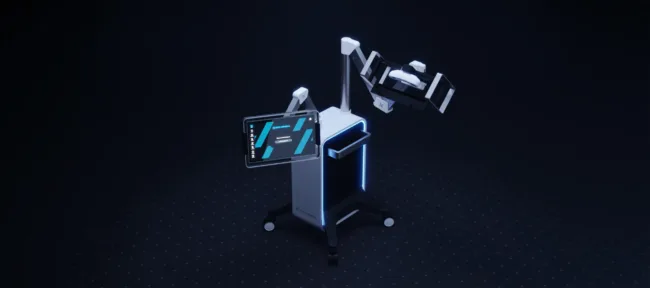
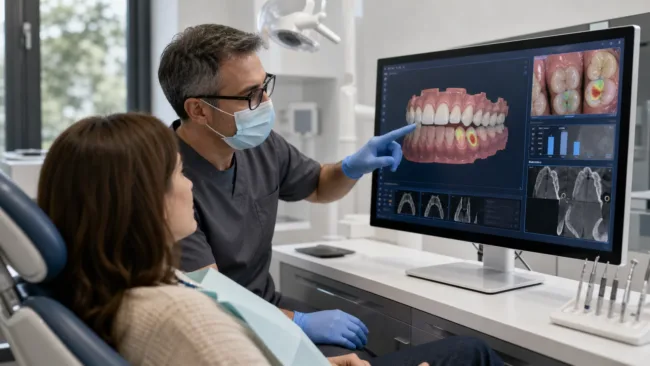
Rivanna’s FDA clearance for Accuro XV opens a new commercial pathway for its musculoskeletal ultrasound platform, allowing qualified healthcare professionals to use the diagnostic imaging system in hospitals and medical clinics. The clearance gives the Charlottesville-based medical technology developer a regulated foothold in point-of-care musculoskeletal imaging while its AI-enabled bone visualization and fracture detection capabilities continue moving through clinical validation.
Why Rivanna’s Accuro XV clearance changes the point-of-care musculoskeletal imaging debate
The strategic importance of the Accuro XV clearance is not that ultrasound suddenly replaces X-ray, computed tomography, or magnetic resonance imaging in fracture care. It is that Rivanna Medical now has a cleared hardware platform for musculoskeletal imaging at the point of care, which could become the base layer for a broader AI-assisted triage workflow if its software modules later clear regulatory review. That distinction matters because the company’s most ambitious claim sits beyond the cleared device itself. The commercial system can now be used for musculoskeletal ultrasound imaging, while BoneEnhance and CADe/x remain the future-facing layer that could determine whether Accuro XV becomes a niche imaging tool or a more disruptive emergency department platform.
For clinicians and hospital administrators, the most relevant question is whether automated volumetric ultrasound can reduce friction in a setting where speed, staffing, radiation exposure, and imaging access all matter. Extremity injuries are common, emergency departments are often crowded, and radiology resources are not always available at the exact moment triage decisions are needed. A portable system that can acquire large field-of-view musculoskeletal images without ionizing radiation could appeal to urgent care centers, emergency departments, sports medicine settings, and military or remote care environments. However, adoption will depend less on the elegance of the platform and more on whether the images are consistently interpretable, whether non-specialist users can operate it reliably, and whether the system fits into real-world clinical decision pathways without adding another bottleneck.
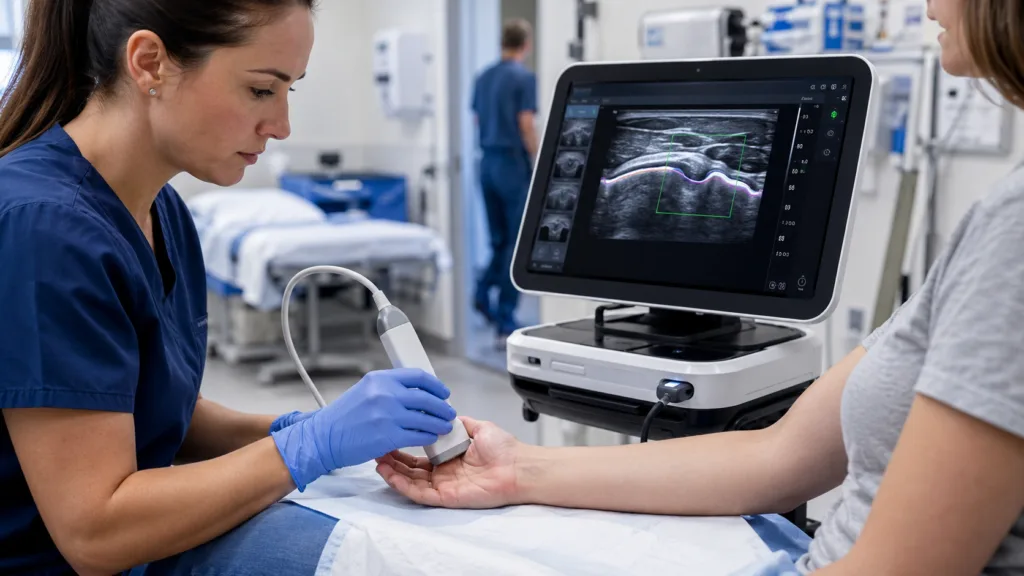
Rivanna Medical is trying to solve a classic point-of-care imaging problem. Ultrasound is portable, repeatable, and radiation-free, but it is also operator-dependent and historically less intuitive for bone injury assessment than radiography. Accuro XV’s automated acquisition model appears designed to reduce that operator-dependence by using a conformable three-dimensional probe, motorized linear translation, and volumetric B-mode image capture over a wider anatomical field. That engineering approach could make ultrasound more reproducible in musculoskeletal applications, yet the unresolved issue is whether reproducibility at the acquisition stage translates into diagnostic confidence at the interpretation stage.
How Accuro XV differs from conventional ultrasound in musculoskeletal injury workflows
Conventional ultrasound has long had value in soft tissue, vascular, abdominal, obstetric, and procedural guidance applications, but its role in fracture triage has been more limited. Bone surfaces can be visualized with ultrasound, but the modality does not provide the same familiar projection-based view as X-ray, and fractures can be missed if the scan field, angle, or user technique is inadequate. Accuro XV’s pitch is therefore not merely that ultrasound can image musculoskeletal anatomy. It is that automated volumetric acquisition can make the modality more useful for structured extremity injury assessment.
The cleared platform’s conformable probe and automated scan path are central to that proposition. By acquiring B-mode images across a larger field after initial positioning, the system may reduce the need for a highly skilled sonographer to manually sweep over the injury site. In theory, this could support a more standardized workflow, especially in high-volume settings where non-radiologist clinicians need a rapid first look before deciding whether additional radiographic imaging is required. That is a meaningful difference from traditional handheld ultrasound, where user skill and anatomical familiarity can strongly influence image quality.
The risk is that automation can narrow one problem while exposing another. A device that standardizes acquisition still has to prove that it can handle variable patient anatomy, pain-limited positioning, swelling, pediatric and adult body differences, irregular extremity surfaces, and the practical disorder of emergency care. The more Accuro XV is positioned as a triage-enabling system, the more it will be judged on real-world workflow robustness rather than controlled technical performance alone. Hospitals will not adopt a new imaging pathway simply because it is portable. They will adopt it if it improves throughput, reduces uncertainty, or creates measurable clinical and economic value.
Why the AI layer is the bigger commercial story but also the bigger regulatory hurdle
The most commercially interesting part of Rivanna Medical’s musculoskeletal imaging strategy is not the cleared ultrasound platform by itself. It is the planned AI decision-support stack around BoneEnhance and CADe/x. BoneEnhance is designed to segment musculoskeletal anatomy and support three-dimensional skeletal visualization, while CADe/x is being developed to assist clinicians in identifying fractures from volumetric ultrasound imaging. If validated and cleared, those modules could move the system from image acquisition into a more decision-support-oriented role.
That shift is important because AI in imaging tends to create value when it addresses a specific clinical bottleneck rather than adding a decorative algorithm on top of existing workflows. Automated fracture detection from ultrasound could be useful if it helps emergency clinicians prioritize radiographic referrals, identify likely fractures faster, or avoid unnecessary imaging in selected low-risk cases. It could also support care settings where radiography access is delayed or constrained. In that sense, Rivanna Medical is not just competing with ultrasound vendors. It is testing whether AI-assisted point-of-care imaging can carve out a new layer between physical examination and conventional radiology.
The limitation is regulatory and evidentiary. FDA clearance of Accuro XV does not mean the AI fracture detection module has been cleared for clinical use. That matters because commercial messaging around AI-enabled imaging can easily outrun what a cleared indication actually permits. Regulatory watchers are likely to focus on whether the AI modules demonstrate enough sensitivity, specificity, usability, and generalizability across sites, operators, patient groups, and fracture types. For emergency use, false negatives are the more uncomfortable risk. A triage tool that misses clinically relevant fractures could undermine clinician trust quickly, even if the system performs well on average.
How this clearance fits into Rivanna Medical’s broader platform strategy
Rivanna Medical has already built its identity around ultrasound guidance and AI-assisted image interpretation, including spinal navigation applications. The Accuro XV clearance extends that platform logic into musculoskeletal imaging and suggests that the diagnostics-focused developer is trying to reuse core capabilities across multiple clinical domains. That platform approach can be valuable in medical devices because regulatory experience, hardware architecture, manufacturing systems, and software development infrastructure may carry over from one indication to another.
For investors, acquirers, and strategic partners watching the point-of-care ultrasound market, the platform angle is probably more important than a single clearance. If Rivanna Medical can show that automated volumetric ultrasound plus AI can work in musculoskeletal injury triage, the same underlying model may have relevance in other anatomy-specific or workflow-specific imaging use cases. That could make the company more attractive to larger ultrasound manufacturers, emergency care technology companies, or digital imaging groups looking for differentiated AI-enabled assets.
However, platform narratives can be seductive before clinical adoption catches up. Each use case has its own clinical workflow, economic buyer, training burden, and reimbursement logic. A device that works for spinal landmark guidance does not automatically win in fracture triage. A system that performs in an academic study does not automatically fit community hospitals or urgent care networks. Rivanna Medical’s next challenge is to prove that the platform can move from regulatory clearance to repeatable commercial deployment without requiring heavy clinical retraining or workflow redesign.
What clinicians and emergency departments may watch before changing imaging workflows
Clinicians are likely to watch three practical issues: who can use Accuro XV effectively, how the images influence patient management, and whether the system reduces or merely redistributes workload. A point-of-care musculoskeletal ultrasound system becomes more compelling if trained non-radiologist users can acquire diagnostic-quality images consistently. It becomes less compelling if every scan still requires specialist oversight, prolonged interpretation, or follow-up imaging that would have happened anyway.
The company’s broader development program appears designed to answer that question by emphasizing automated acquisition and AI-assisted interpretation. If future evidence shows that users with limited training can generate adequate extremity images, Rivanna Medical could make a stronger case for emergency department deployment. That would align with a wider healthcare trend toward decentralizing imaging tasks while preserving diagnostic oversight through software, protocols, and escalation rules. The healthcare system likes decentralization when it saves time. It becomes more skeptical when decentralization creates new ambiguity.
The harder question is whether the system changes clinical decisions. An ultrasound scan that confirms the need for X-ray may still be useful if it speeds triage or helps prioritize imaging. But payers and hospital buyers may ask whether that value is enough to justify acquisition, maintenance, training, and integration costs. If Accuro XV becomes an additional step before radiography in many cases, adoption may be slower. If it reduces unnecessary radiographic imaging in defined patient groups, improves early triage in crowded settings, or supports care in resource-limited environments, the commercial argument becomes stronger.
Why reimbursement and workflow economics may matter as much as FDA clearance
FDA clearance creates permission to market, not automatic market penetration. For Accuro XV, the commercial pathway will likely depend on how hospitals classify the device in workflow and budget terms. Is it a radiology tool, an emergency department triage tool, a sports medicine imaging tool, or a procedural support platform? Each answer leads to a different buyer, different utilization pattern, and different reimbursement or cost-avoidance story.
If Rivanna Medical targets emergency departments, the value proposition may lean on throughput, reduced radiation exposure, and earlier triage decisions. If it targets urgent care or outpatient orthopedics, the story may focus on access to imaging and faster referral decisions. If it targets military, rural, or field settings, the core advantage may be portability and reduced dependence on fixed radiography infrastructure. None of those pathways is impossible, but each requires evidence that speaks to that setting’s economics rather than general technical capability.
This is where AI could become commercially decisive. A hardware-only ultrasound system may face a crowded market and established purchasing habits. A validated AI-assisted volumetric fracture triage platform could create a more differentiated category. Yet AI also raises ongoing responsibilities around software updates, performance monitoring, dataset representativeness, clinician training, and medico-legal boundaries. Hospitals will want clarity on whether the system supports decisions, suggests referrals, or materially influences diagnostic conclusions.
What could go wrong after Rivanna’s FDA clearance for Accuro XV
The main risk is that the market reads the clearance as an AI fracture detection approval when the current milestone is better understood as clearance for the Accuro XV diagnostic ultrasound system. That gap matters because the long-term commercial excitement depends heavily on AI decision-support modules that still require validation and clearance. If those modules take longer than expected, or if clinical data show narrower performance than hoped, the platform may remain useful but less transformative.
A second risk is workflow inertia. Radiography is deeply embedded in musculoskeletal injury pathways because it is familiar, fast, widely available, and legally defensible. Even when a new modality offers advantages, clinicians may hesitate to alter triage protocols unless evidence, guidelines, reimbursement, and hospital operations line up. Ultrasound’s operator-dependence has also shaped clinician expectations over many years, and automated acquisition will need to overcome that legacy perception.
A third risk is that real-world use exposes edge cases not fully captured in controlled validation. Fracture location, injury severity, swelling, pediatric anatomy, cast or splint interference, patient pain, and operator variability could all affect performance. For AI modules, dataset diversity will be critical because emergency department populations are rarely tidy. Regulators and clinicians will want confidence that performance holds across age groups, body types, injury mechanisms, and care environments.
What Rivanna Medical’s next evidence milestones may reveal about AI-enabled ultrasound
The next phase of the story will be shaped by clinical validation, AI module regulatory submissions, and early commercial feedback from hospital or clinic users. The most meaningful evidence would go beyond image adequacy and show how Accuro XV affects clinical pathways. Does it shorten triage time? Does it improve referral decisions? Does it reduce unnecessary imaging? Does it help identify fractures that might otherwise be delayed? Does it perform consistently when used outside expert hands?
For industry observers, Accuro XV is a case study in where medical imaging AI may be heading. The first wave of imaging AI often focused on interpreting existing radiology images. Rivanna Medical is pursuing a more integrated model where acquisition hardware, volumetric imaging, and AI decision support are designed together. That could be more powerful because the data capture process is structured around the algorithm’s needs from the beginning. It could also be harder because success depends on device usability, clinical adoption, regulatory clearance, and algorithm performance all moving in sequence.
The FDA clearance gives Rivanna Medical a real commercial starting point, but not the final answer. Accuro XV now has a regulated route into musculoskeletal ultrasound imaging, and that alone is a meaningful step for point-of-care diagnostics. The bigger question is whether the AI layer can convert automated ultrasound from an imaging alternative into a trusted triage system. If Rivanna Medical can prove that, the company may help push musculoskeletal injury assessment into a more decentralized, software-assisted era. If not, Accuro XV may still be a useful imaging platform, but the market’s most ambitious expectations will need to be recalibrated.