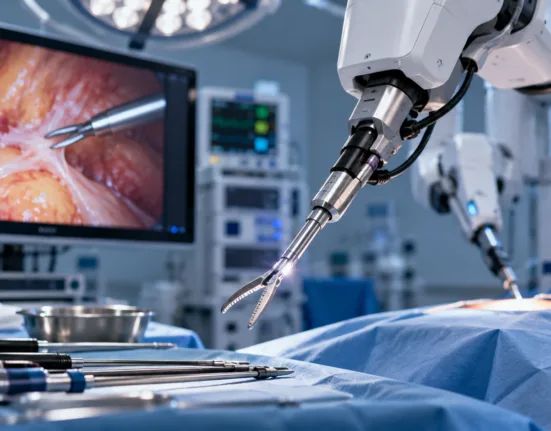
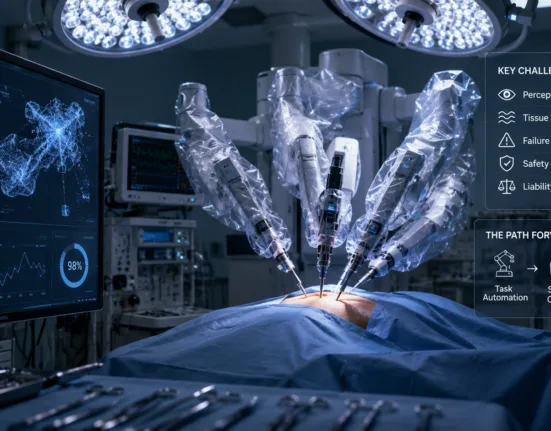
Medtronic PLC has submitted 510(k) filings to the U.S. Food and Drug Administration to expand the Hugo robotic-assisted surgery system into general and gynecologic specialties in the United States. The submissions follow the system’s prior FDA clearance for urologic procedures and mark a critical step in Medtronic’s attempt to broaden its U.S. surgical robotics platform beyond its first approved specialty.
Why do Medtronic’s Hugo filings matter for the U.S. robotic surgery market?
The filings matter because surgical robotics remains one of the most valuable and strategically contested segments in medical technology. For years, Intuitive Surgical Inc. has dominated the field through the da Vinci platform, a deep installed base, strong surgeon familiarity and a recurring revenue model built around instruments, accessories and services. Medtronic’s Hugo robotic-assisted surgery system is one of the few platforms with enough global scale, capital backing and hospital relationships to mount a serious long-term challenge.
The confirmed development is not an approval, but it is still strategically important. A 510(k) submission means Medtronic is asking the FDA to clear expanded indications that would move Hugo into larger procedural categories, including general and gynecologic surgery. That matters because urology is a meaningful starting point, but general surgery and gynecology are broader adoption gateways. Hernia repair, cholecystectomy, hysterectomy and other minimally invasive procedures can drive higher procedural volume if a robotic system is accepted by surgeons and hospitals.
The risk is that surgical robotics competition is not decided by regulatory clearance alone. Hospitals evaluate robot platforms through procedure volume, surgeon training, operating room integration, procedure economics, clinical outcomes, service reliability and instrument costs. Even if the FDA clears the expanded indications, Medtronic must still convince hospitals that Hugo can fit into established robotic surgery programmes or justify new investments where Intuitive Surgical already has entrenched relationships.
How could general and gynecologic indications change Hugo’s commercial opportunity?
General and gynecologic surgery would expand Hugo’s addressable market in a way that urology alone cannot. Urologic procedures, including prostatectomy, nephrectomy and cystectomy, helped establish the platform’s U.S. regulatory foothold. However, broader surgical adoption depends on moving into specialties that generate large volumes and involve a wider surgeon base. General surgery and gynecology offer exactly that opportunity.
For Medtronic, these indications could help shift Hugo from a specialty entry product into a broader operating room platform. That would be commercially important because surgical robotics depends on utilisation. Hospitals need enough procedure volume across specialties to justify capital investment, training programmes, service contracts and instrument inventory. A robot used by only one department may struggle to deliver a convincing economic case. A multi-specialty platform can spread costs across more procedures and more surgeons.
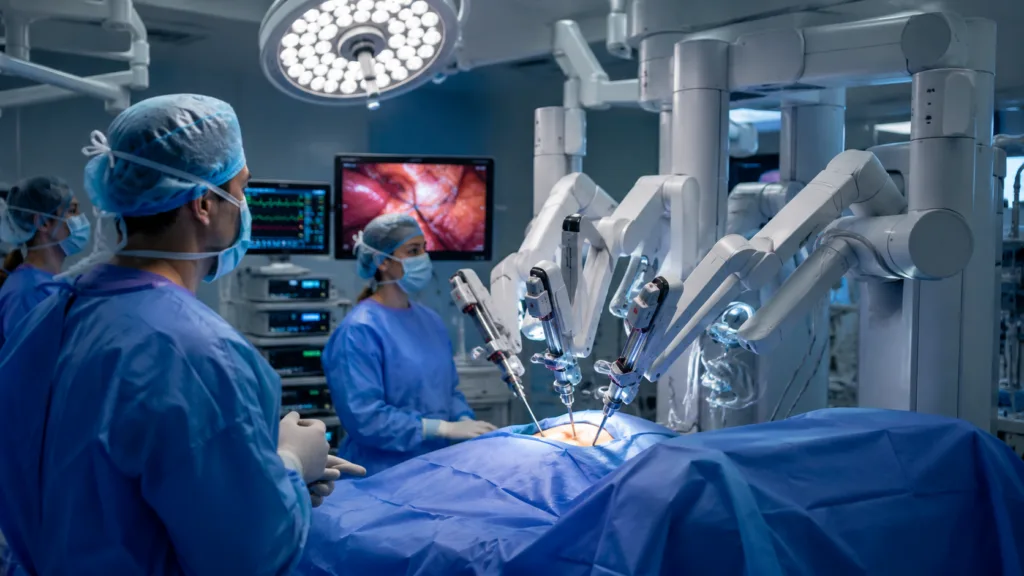
The limitation is that broader indication also increases operational complexity. General and gynecologic surgeons have different procedural needs, training requirements and workflow expectations from urologists. Medtronic must show that Hugo’s modular architecture, instruments and software can support these workflows reliably. A wider label can unlock opportunity, but it also exposes the platform to tougher comparisons against established robotic systems across multiple use cases.
Why is the Hugo system still playing catch-up despite Medtronic’s scale?
Medtronic has enormous scale in medical technology, but surgical robotics is a market where timing and ecosystem depth matter. Intuitive Surgical has spent decades building clinical trust, procedure-specific training pathways, hospital purchasing relationships and a large installed base. That history creates a formidable moat because surgeons trained on one platform may be reluctant to switch unless the alternative offers clear operational or economic advantages.
Hugo’s challenge is therefore not just technological. It must overcome familiarity bias. Hospitals already using da Vinci systems may see limited reason to add a second robotic platform unless it improves access, pricing leverage, scheduling flexibility or procedural economics. Medtronic’s modular design can be positioned as a differentiator, especially for operating rooms seeking flexibility. But the platform must prove that flexibility translates into real efficiency rather than added setup or training burden.
The risk is that being a credible challenger does not automatically produce rapid market share. Surgical robotics adoption is sticky. Surgeons, nurses, operating room teams and administrators all participate in platform decisions. Medtronic’s global brand gives Hugo a serious path, but the company still needs U.S. clinical experience, surgeon champions and strong early deployment outcomes to build momentum.
What does the filing say about Medtronic’s broader surgical strategy?
The filings show that Medtronic is trying to turn Hugo into a platform rather than a single-specialty robot. That strategy is important because robotic surgery economics depend on procedural breadth and ecosystem expansion. The company is not only pursuing expanded surgical indications, but also related instruments and accessories that can support specific workflows. The pending filing for the LigaSure RAS Maryland instrument and clearance for ProGrip Advanced self-gripping polypropylene mesh reinforce that broader procedural toolkit strategy.
This matters because surgical robotics is increasingly about the full ecosystem. A robot without a broad and reliable instrument set can struggle, even if the core console and arms perform well. Surgeons need confidence that energy devices, stapling, grasping, dissection tools, imaging support and consumables fit the procedures they perform. Medtronic already has a large surgical instrument and consumables business, which could become an advantage if Hugo becomes a channel for its broader operating room portfolio.
The limitation is that integration takes time. A large surgical portfolio does not automatically become a seamless robotic ecosystem. Each instrument must be cleared, trained, stocked and integrated into surgical practice. Medtronic’s opportunity is to leverage its existing surgical franchise. Its challenge is to avoid fragmented adoption where the robot, instruments and procedure economics do not align cleanly.
How could hospitals evaluate Hugo against da Vinci in real purchasing decisions?
Hospitals will evaluate Hugo through practical economics rather than technology headlines. The questions will be straightforward: does the platform reduce procedure bottlenecks, support more surgeons, improve operating room utilisation, lower per-procedure cost, offer better flexibility or create pricing competition against the incumbent? If Hugo can answer some of these questions convincingly, hospitals may be more willing to consider it even where da Vinci systems are already installed.
The competitive opening for Medtronic may be access and capacity. Many hospitals want to expand minimally invasive surgery, but robotic capacity can be constrained by system availability and cost. A second platform could help expand access if it supports scheduling flexibility and multi-specialty use. Hugo’s modular design may appeal to institutions that want to adapt the robot footprint to different operating rooms rather than rely on a fixed setup.
The risk is that adding another platform can also create complexity. Hospitals may face duplicated training requirements, instrument inventories, service contracts and credentialing processes. Surgeons may not want to divide their learning curve across systems. For Hugo to win, Medtronic must make the case that platform diversity improves operating room strategy rather than complicating it.
Why does FDA clearance timing matter in robotic surgery competition?
Timing matters because robotic surgery platforms gain value through accumulated use. Each additional cleared indication can bring new surgeons, more cases, more data and stronger institutional confidence. Medtronic’s initial urology clearance gave Hugo an entry point in the United States, but the filing for general and gynecologic specialties is the next major regulatory gate. If cleared, it could accelerate U.S. site expansion and increase the number of hospitals willing to evaluate the system.
The FDA process also shapes commercial expectations. A filing is a forward-looking milestone, not a market access event. Until clearance is granted, Medtronic cannot fully commercialize Hugo for the submitted expanded indications in the United States. That means hospitals interested in broader use may wait for regulatory clarity before making platform decisions. Competitors, meanwhile, continue to strengthen their installed base and procedure evidence.
The unresolved question is whether the FDA review proceeds smoothly and whether the eventual label is broad enough to support the commercial opportunity Medtronic is targeting. Narrower wording, additional data requirements or delayed clearance could slow momentum. A timely clearance with practical procedure coverage would strengthen Hugo’s case as a real multi-specialty platform.
What does this mean for Intuitive Surgical and the wider robotic surgery field?
For Intuitive Surgical, Medtronic’s filing is another reminder that the robotic surgery market is becoming more competitive, even if the incumbent remains far ahead. Intuitive Surgical still has scale advantages, deep surgeon relationships and a strong instrument ecosystem. However, large medtech entrants can gradually pressure pricing, hospital negotiations and platform expectations, especially if they offer credible alternatives for high-volume procedures.
The wider field is also changing. Hospitals are increasingly open to evaluating multi-platform robotic strategies as more companies enter the market. This could alter purchasing dynamics over time. Instead of one dominant robot defining the category, the market may move toward segmented platform selection, where hospitals choose different systems based on specialty needs, cost models and surgeon preference.
The risk for challengers is that market fragmentation may not immediately translate into large share shifts. Intuitive Surgical’s installed base and training ecosystem remain difficult to displace. New entrants must show not only that their systems are safe and effective, but that they can reduce friction in real operating rooms. Medtronic has the scale to compete, but the burden of proof sits heavily on the challenger.
What does Medtronic’s stock performance suggest about investor sentiment?
Medtronic PLC shares recently traded at $81.67, giving the healthcare technology group a market capitalisation of roughly $105.31 billion. Intuitive Surgical Inc. shares recently traded at $422.06, with a market capitalisation of about $151.86 billion. The gap underscores how much value investors assign to the surgical robotics model when it is already scaled, procedure-rich and recurring-revenue heavy.
For Medtronic, Hugo is strategically important but not yet company-defining. The group is diversified across cardiovascular, neuroscience, diabetes, medical surgical and other businesses. That diversification reduces dependence on any one platform, but it also means investors will look for evidence that Hugo can eventually contribute meaningfully to growth rather than remain a long-cycle strategic project.
The sentiment signal is nuanced. Medtronic’s filings show progress in a high-value category, but investors will likely wait for clearance, installed base expansion, procedure volumes and revenue contribution before assigning significant value. The upside is that even modest share capture in robotic surgery could matter over time. The downside is that competing with Intuitive Surgical requires sustained investment, patience and clinical execution.
What adoption risks could slow Medtronic even if the FDA clears the expanded indications?
The biggest adoption risks are training, workflow fit and economics. Robotic surgery platforms require surgeons and operating room staff to build confidence through repeated use. If setup times are long, instrument availability is limited or early cases feel operationally cumbersome, adoption can slow. Hospitals may also hesitate if reimbursement does not clearly support the added cost of robotic procedures in certain categories.
Surgeon preference is another powerful variable. Many surgeons are already trained on da Vinci systems and have developed technique, confidence and case routines around that platform. Medtronic must create training and support programmes strong enough to make switching or dual-platform practice feel worthwhile. That is a major commercial execution challenge.
The unresolved issue is whether Hugo’s modular architecture becomes a decisive advantage or merely a different design. Modularity can offer flexibility, but it must not increase operating room complexity. The platform’s success will depend on whether hospitals experience the design as easier to manage, not just easier to describe.
What should surgeons, hospitals and industry observers watch next?
Surgeons should watch the FDA review outcome and the clinical support package behind the expanded indications. They will want to know which general and gynecologic procedures are covered, how training will work, what instruments are available and how the system performs in procedures that require efficiency and precise tissue handling.
Hospitals should watch total cost of ownership, utilisation strategy, service model and instrument economics. A robot can be clinically attractive but financially difficult if case volume is insufficient. The strongest hospital adoption case will likely involve multi-specialty use, strong surgeon demand and a clear plan for operating room integration.
Industry observers should watch how quickly Medtronic can convert regulatory progress into U.S. installations and real-world cases. The competitive story will not be decided at filing. It will be decided by whether Hugo becomes visible in hospital robotic programmes, whether surgeons publish and discuss early experience, and whether Intuitive Surgical faces meaningful pressure in new system placements.
Could Hugo become a credible second pole in robotic-assisted surgery?
Medtronic’s Hugo filings do not yet change the U.S. robotic surgery market by themselves, but they do mark an important step toward a more competitive category. Urology gave the platform an entry point. General and gynecologic surgery could give it procedural breadth. If the FDA clears the expanded indications and hospitals see operational value, Hugo could become a more credible alternative to the incumbent robotic ecosystem.
The opportunity is large because robotic surgery continues to expand across specialties and geographies. The challenge is equally large because Intuitive Surgical has set a high bar for clinical confidence, ecosystem depth and commercial execution. Medtronic’s scale gives it a real chance. Its next test is proving that Hugo can move from regulatory progress to repeated, trusted use in operating rooms.
The most balanced reading is that Medtronic has taken a necessary step, not a decisive one. A broader U.S. label would strengthen the platform’s commercial logic, but adoption will depend on evidence, training, economics and surgeon confidence. Hugo may not dethrone the market leader quickly. However, it could still reshape competition if it gives hospitals a serious second platform in high-volume robotic surgery.