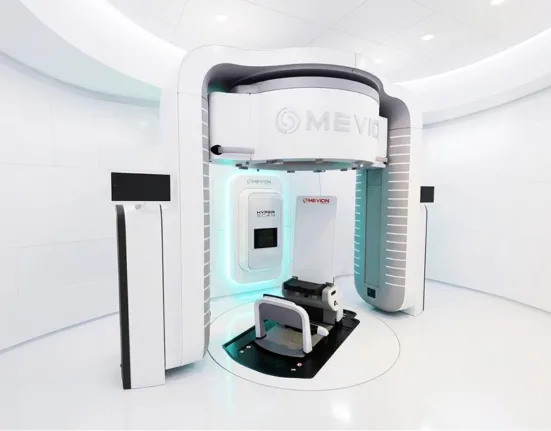
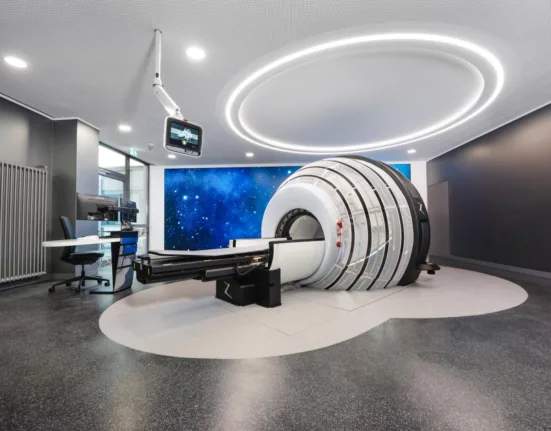
Mevion Medical Systems has been selected to supply its MEVION S250-FIT Proton Therapy System to Istituto Nazionale Tumori IRCCS Fondazione G. Pascale in Naples, establishing what is expected to become Southern Italy’s first proton therapy center. The award, secured through a competitive European tender, positions the compact, vault-integrated proton therapy platform within a broader effort to expand advanced radiation oncology access beyond Italy’s northern treatment hubs.
Why Mevion’s Naples award matters for proton therapy access in Southern Italy
The selection of Mevion Medical Systems for Fondazione Pascale is not simply another equipment order in radiation oncology. It is a test case for whether compact proton therapy can move from a niche infrastructure model into a more distributed cancer care model across Europe. Proton therapy has long been clinically attractive because of its ability to deliver targeted radiation while limiting dose to surrounding tissue, but its adoption has often been constrained by capital cost, facility complexity, shielding requirements, and the need for specialist operational infrastructure.
That is why the Naples project carries significance beyond the boundaries of Campania. Until now, Italian patients seeking proton therapy have largely depended on centers located in Northern Italy. For patients in Southern Italy, that geography can turn a complex cancer treatment pathway into a logistical and financial burden. Travel, accommodation, caregiver support, time away from work, and continuity with local oncology teams all influence whether patients can realistically access advanced radiation modalities. By placing proton therapy inside a major oncology institute in Naples, Fondazione Pascale is addressing not only technology access but also regional health equity.
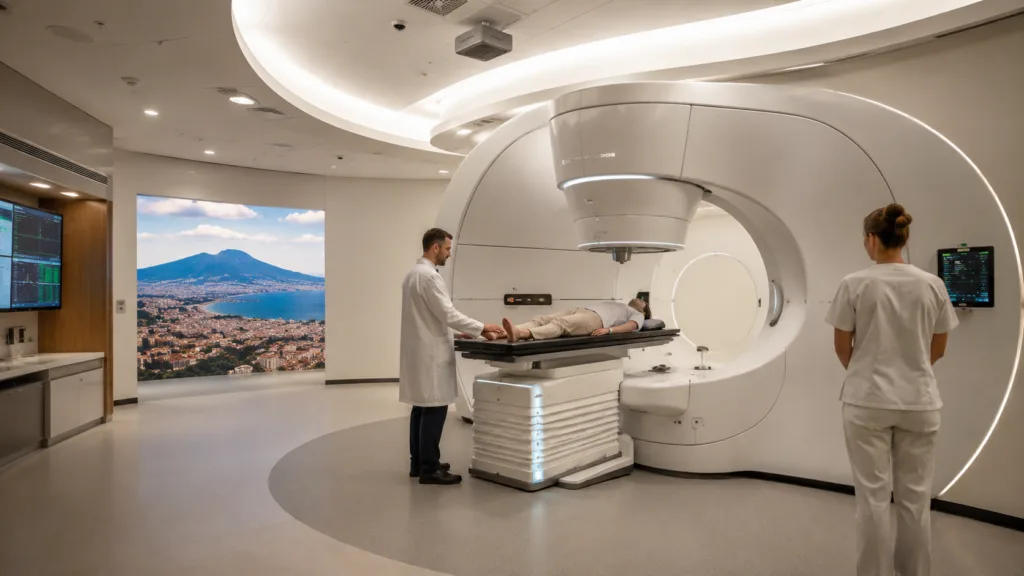
The risk is that first-of-region projects can become symbols before they become sustainable clinical services. Proton therapy requires trained teams, referral pathways, treatment planning expertise, quality assurance discipline, and reimbursement alignment. A compact system may reduce infrastructure barriers, but it does not eliminate the operational burden of building a high-performing proton therapy program. The Naples center will therefore be watched for whether it can convert procurement success into routine clinical throughput, multidisciplinary adoption, and measurable patient access gains.
How the MEVION S250-FIT changes the infrastructure equation for cancer centers
The core proposition of the MEVION S250-FIT is that proton therapy can fit into the footprint and workflow of conventional radiotherapy more easily than traditional proton systems. The system is designed for installation within standard radiotherapy vaults, which is strategically important because many cancer centers already operate linear accelerator environments but lack the land, capital, or construction runway needed for large multi-room proton therapy facilities.
This is where the Mevion model differs from the historic image of proton therapy as a mega-project. Traditional proton centers often require purpose-built facilities, large gantry rooms, major shielding works, and long construction timelines. A vault-integrated model could give hospitals a less disruptive path to proton therapy adoption, especially in dense urban environments where construction space is scarce and healthcare capital budgets are under pressure.
However, compactness alone is not the same as economic certainty. Cancer centers still need to justify patient volumes, referral networks, payer coverage, maintenance costs, uptime expectations, and clinical case mix. For proton therapy to scale in Europe, it must show not only that it can fit into existing infrastructure but also that it can fit into existing reimbursement and hospital productivity models. The Naples award therefore becomes a practical test of whether smaller infrastructure can produce a more investable proton therapy business case.
What the Pascale project reveals about Europe’s proton therapy adoption challenge
Europe has an unusually strong rationale for compact proton therapy. Many national and regional health systems recognize the clinical potential of advanced radiation therapy, but procurement cycles are cautious, budgets are scrutinized, and capital projects must compete with broader oncology demands such as diagnostics, systemic therapies, surgical capacity, and digital health infrastructure. The result is a familiar contradiction: proton therapy is scientifically compelling, but institutionally difficult to deploy at scale.
Fondazione Pascale’s decision signals that some European oncology systems may now be more open to platforms that reduce the gap between clinical ambition and infrastructure reality. The competitive tender process also matters because it suggests the decision was not framed only around technology novelty. The evaluation included clinical capability, cost efficiency, and long-term value, which are precisely the criteria that public and academic cancer centers will use when weighing whether proton therapy is a priority.
Still, Europe’s adoption curve will depend on proof rather than promise. Hospitals will want evidence that compact systems can support modern treatment planning, deliver reliable clinical uptime, integrate smoothly with existing radiotherapy teams, and serve enough eligible patients to justify investment. Regulators and payers will also continue to assess which indications generate the strongest value case. For Mevion Medical Systems, the Naples project is therefore less a one-off European sale and more a credibility marker for future tenders.
Why upright positioning and treatment workflow integration could shape clinical adoption
The planned Naples project brings together Mevion Medical Systems, Leo Cancer Care, Morveducci, and RaySearch Laboratories, creating a multi-partner model that combines compact proton therapy, upright patient positioning, specialized construction, oncology information systems, and treatment planning software. The inclusion of Leo Cancer Care’s Marie Upright Patient Positioning and CT Imaging System is particularly important because it supports a compact configuration without a traditional rotating gantry.
That design choice reflects a broader debate in radiation oncology: how much of the proton therapy experience must resemble legacy proton infrastructure, and how much can be re-engineered around smaller spaces, different positioning models, and integrated digital workflow? Upright positioning could potentially help reduce room size and mechanical complexity, but clinical adoption will depend on comfort, reproducibility, imaging accuracy, treatment planning confidence, and staff familiarity.
RaySearch Laboratories’ role also matters because treatment planning and workflow systems are not peripheral in proton therapy. They are central to whether complex modalities can be delivered safely and efficiently. As proton therapy becomes more compact, software integration becomes even more important. The most successful systems will not simply be smaller machines. They will be platforms that fit naturally into how radiation oncology departments already contour, plan, schedule, image, treat, and document care.
What is genuinely new versus incremental in Mevion’s European expansion
The broader proton therapy market has seen compact and single-room systems before, including earlier Mevion platforms. What is more strategically relevant here is the specific positioning of the MEVION S250-FIT as a LINAC-vault-ready system that can be adopted within the physical and operational envelope of conventional radiotherapy. That reframes proton therapy from a standalone capital campus decision into a more modular expansion decision for existing cancer centers.
The Naples project also follows recent regulatory and commercial momentum for the S250-FIT platform, including U.S. FDA clearance and CE marking. Those milestones are not merely administrative. They are commercial prerequisites for cross-market adoption and procurement confidence. For European hospital buyers, CE marking provides a clearer route to evaluation, while FDA clearance reinforces the platform’s regulatory credibility in another major oncology market.
The unresolved question is whether regulatory clearance and a strong reference site pipeline will translate into broader European conversion. Proton therapy procurement remains slow, and every hospital must balance clinical aspiration with financial discipline. Mevion Medical Systems has a sharper access argument than traditional proton infrastructure providers, but the sector still needs long-term data on utilization, economics, installation timelines, service reliability, and patient selection in real-world settings.
How this could affect competitive dynamics in proton therapy and radiation oncology
Mevion Medical Systems is positioning compact proton therapy as an answer to one of radiation oncology’s most persistent market bottlenecks: the mismatch between clinical demand and infrastructure feasibility. If the Naples center performs well, it could strengthen the case for compact systems in mid-sized academic centers, regional cancer institutes, and hospitals that previously viewed proton therapy as too large or too expensive to consider.
That could put pressure on traditional proton therapy vendors to sharpen their own value proposition around footprint, cost, flexibility, and workflow integration. It may also influence how cancer centers think about capital allocation. Rather than choosing between conventional radiotherapy upgrades and a massive proton buildout, hospitals may increasingly ask whether a compact proton system can sit alongside existing LINAC infrastructure as a targeted service-line expansion.
The competitive risk for Mevion Medical Systems is that compact proton therapy must avoid being perceived as a compromise. Cancer centers will not adopt smaller platforms merely because they are easier to install. They will want assurance that clinical performance, treatment sophistication, image guidance, planning integration, service support, and future upgrade pathways remain robust. In high-end oncology technology, smaller only wins if it is also clinically credible.
What clinicians, administrators, and regulators will watch next
Clinicians will likely focus on which patients are prioritized when the Naples center becomes operational. Proton therapy is not automatically necessary for every cancer case, and careful patient selection will be essential. Pediatric cancers, tumors near sensitive organs, re-irradiation cases, and selected adult indications are often central to proton therapy value discussions. The strength of the program will depend partly on whether Fondazione Pascale can build disciplined multidisciplinary pathways around those clinical priorities.
Hospital administrators will focus on practical execution. Construction delivery, workflow design, commissioning, training, staffing, referral development, and patient throughput will determine whether the center becomes a regional access success or a slower-moving prestige project. In publicly influenced healthcare systems, technology adoption must prove its value through access, efficiency, and clinical relevance.
Regulators and reimbursement stakeholders will watch the Naples project as part of a broader question about how advanced radiotherapy should be distributed across national health systems. If compact proton therapy can reduce geographic inequality without requiring the same capital intensity as legacy models, it could influence future health planning in other underserved regions. If costs remain high and utilization is narrow, adoption may remain selective.
Why the Naples project could become a reference point for compact oncology infrastructure
The real importance of the Fondazione Pascale award lies in what it may signal about the next generation of oncology infrastructure. Cancer centers are under pressure to modernize, but they are also constrained by space, capital, staffing, and reimbursement. Technologies that can integrate into existing clinical environments will have an advantage over systems that require hospitals to rebuild themselves around the equipment.
For Mevion Medical Systems, the Naples project gives the MEVION S250-FIT a high-profile European reference point tied to a clear access problem. That is commercially valuable because future buyers will not only ask whether the system works. They will ask whether it solved a real healthcare delivery bottleneck. Southern Italy provides exactly that kind of test.
A neutral reading suggests the award is strategically meaningful but not yet market-transforming. The procurement win validates Mevion Medical Systems’ compact proton therapy thesis in a major European healthcare setting. The harder test begins with implementation, clinical adoption, utilization, and long-term sustainability. If the Naples center can deliver on those fronts, compact proton therapy may begin to look less like a specialized workaround and more like a scalable infrastructure model for regional cancer care.