A conventional vaccine is manufactured in enormous batches so that essentially the same biological product can be given to millions of people. A personalized neoantigen cancer vaccine reverses that industrial model. Tissue from one patient’s tumor is sequenced, mutations unique to that cancer are identified, computational systems predict which mutated fragments are most likely to be recognized by that individual’s immune system and a vaccine encoding a selected collection of those neoantigens is manufactured specifically for that patient. The approach combines genomics, immunology, artificial intelligence and rapid pharmaceutical manufacturing into one therapeutic workflow, making personalized cancer vaccination as much an operational challenge as an immunological one.
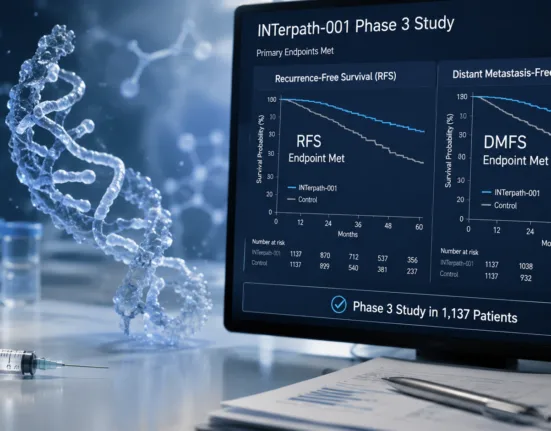
The scientific proposition has moved considerably beyond a theoretical personalized-medicine exercise. Neoantigen vaccines have generated durable tumor-specific T-cell responses in clinical studies, including long-lived CD8-positive T-cell clones observed years after vaccination in pancreatic cancer. More recently, personalized mRNA therapy reached a pivotal threshold when the 1,137-patient Phase 3 INTerpath-001 melanoma study of intismeran autogene plus pembrolizumab met its recurrence-free survival and distant-metastasis-free survival objectives, although detailed Phase 3 effect sizes had not yet been publicly disclosed when the topline result was announced in August 2026.
What exactly is a cancer neoantigen?
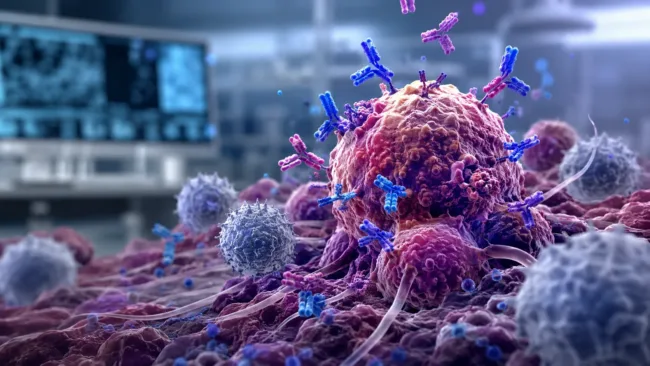
Cancer develops through genetic alterations, and some mutations change the amino-acid sequence of proteins produced inside malignant cells. When fragments of those mutated proteins are processed and displayed on the cell surface through human leukocyte antigen, or HLA, molecules, the immune system may recognize them as foreign because the corresponding sequence is absent from healthy cells. These mutation-derived immune targets are called neoantigens.
That tumor specificity creates their attraction as vaccine targets. A vaccine directed against a protein also widely present in normal tissue risks inducing tolerance or unwanted immune damage, whereas a genuine mutation-derived neoantigen can theoretically focus T cells on malignant cells while largely sparing normal tissue.
The difficulty is that most neoantigens are not shared broadly across patients. Two people with the same type and stage of cancer can carry very different tumor mutations, possess different HLA molecules and therefore present entirely different collections of targetable neoantigens. This is why the most personalized vaccine strategies cannot simply choose one melanoma antigen or one pancreatic-cancer mutation and manufacture the same vaccine for everyone.
How does a personalized cancer vaccine move from surgery to manufacturing?
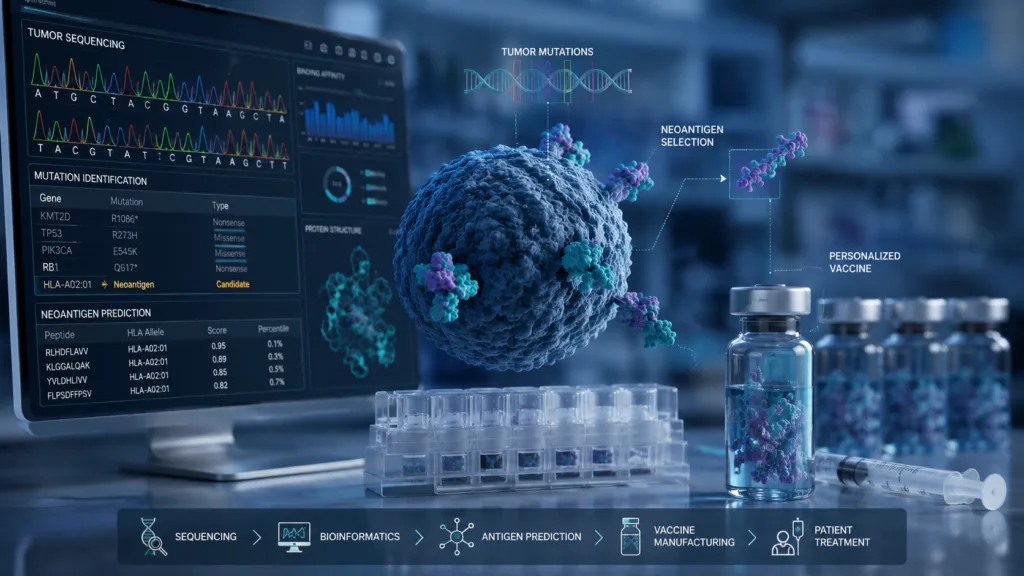
The workflow begins with tumor material, usually obtained through surgery or biopsy, alongside normal DNA that helps researchers distinguish inherited variants from cancer-specific mutations. Next-generation sequencing identifies the tumor’s mutation landscape, after which computational pipelines predict which altered peptide sequences are most likely to bind the patient’s HLA molecules and generate useful T-cell responses.
Those prediction systems effectively rank a long list of possible mutations. Many tumor mutations will never create useful immune targets because the mutated protein is not expressed adequately, the peptide is not processed correctly, it does not bind strongly enough to HLA or existing T cells cannot recognize it. The challenge is therefore not simply finding mutations but identifying the relatively small subset most likely to become immunologically productive vaccine components.
Selected sequences can then be encoded in mRNA or delivered through peptide, DNA, dendritic-cell or other platforms. An individualized mRNA product can contain multiple neoantigens simultaneously, allowing the immune system to target several tumor-specific mutations rather than betting the treatment on one antigen that malignant cells might subsequently lose.
Why has mRNA become such a strong platform for personalized cancer vaccines?
mRNA is programmable. Once developers establish the manufacturing platform and delivery system, changing the antigenic content can primarily involve changing the nucleotide sequence rather than redesigning the entire physical drug platform. This makes mRNA particularly suited to individualized manufacturing where every patient may require a different collection of encoded neoantigens.
The same mRNA molecule can encode multiple antigen sequences, while delivery formulations can help move the RNA into antigen-presenting cells that translate those sequences and present the resulting peptides to T cells. mRNA itself can also provide immunostimulatory signals, although formulation and sequence modifications must balance immunogenicity against excessive innate immune activation.
The COVID-19 vaccine experience demonstrated that mRNA medicines can be manufactured at enormous scale, but personalized oncology creates a different industrial challenge. The goal is not billions of identical doses. It is thousands of different batches, each produced accurately and quickly for one patient, with manufacturing and quality systems capable of releasing those products while the patient remains within a clinically useful treatment window.
Why are personalized vaccines often combined with checkpoint inhibitors?
Creating tumor-specific T cells does not guarantee that those cells will successfully destroy cancer. Tumors can suppress immune activity by exploiting checkpoint pathways such as PD-1/PD-L1, creating a situation where vaccine-induced T cells recognize cancer but become functionally inhibited after entering the tumor microenvironment.
Checkpoint inhibitors can release part of that brake. The combination therefore attempts to solve two separate problems: vaccination creates or expands T cells capable of recognizing tumor neoantigens, while checkpoint blockade helps those cells remain active against malignant tissue. This complementary logic underpins multiple current personalized-vaccine programmes.
The strategy is especially attractive after surgery, when visible disease has been removed but microscopic residual cancer may remain. The vaccine does not have to shrink a large established tumor immediately; it may instead train immune surveillance capable of eliminating small residual malignant populations before they grow into clinically detectable recurrence.
What has pancreatic cancer taught researchers about immune memory?
Pancreatic ductal adenocarcinoma is generally considered immunologically difficult because it has relatively few mutations and a strongly suppressive tumor microenvironment. That made results from an individualized mRNA neoantigen vaccine programme particularly informative.
In a small Phase 1 study involving resected pancreatic cancer, autogene cevumeran induced high-magnitude neoantigen-specific T-cell responses in eight of 16 evaluable vaccinated patients. At extended median follow-up of 3.2 years, those immune responders had not reached median recurrence-free survival, compared with 13.4 months among patients without vaccine-induced responses. Researchers estimated an average lifespan of 7.7 years for induced CD8-positive T-cell clones, and 86% of vaccine-induced clones per patient persisted at substantial frequencies roughly three years after vaccination.
The trial was tiny and non-randomized for the vaccine-response comparison, meaning the association cannot prove that vaccination itself caused the difference in recurrence. Its significance lies in demonstrating that an individualized mRNA vaccine can create de novo tumor-specific T cells that remain detectable and functional for years, addressing one of the central biological questions around therapeutic cancer vaccination.
What does the first positive Phase 3 personalized mRNA vaccine result change?
The melanoma Phase 3 result changes the evidentiary conversation. Earlier personalized-vaccine programmes showed that bespoke manufacturing was feasible and that vaccine-induced immune responses could correlate with encouraging clinical outcomes, but the field still needed evidence from a large randomized trial that adding an individualized vaccine to established treatment could improve clinically meaningful endpoints.
INTerpath-001 enrolled 1,137 patients with completely resected high-risk stage IIB through IV melanoma and compared intismeran autogene plus pembrolizumab with pembrolizumab alone. The companies reported statistically significant and clinically meaningful improvements in recurrence-free survival and distant-metastasis-free survival, with no new safety signal, although the detailed hazard ratios and complete data remain necessary for independent assessment.
A successful regulatory outcome would create an entirely new manufacturing challenge: producing personalized oncology medicines reliably at commercial rather than experimental scale.
Why could manufacturing become the bottleneck even if the clinical biology works?
A standard pharmaceutical factory produces large batches and uses statistical quality systems designed around repeatability. Personalized vaccines require repeated production of different sequences while maintaining consistent identity, purity, potency and release testing. The manufacturing platform must therefore be standardized even though the active sequence changes between patients.
Speed is equally important. A patient at high risk of cancer recurrence cannot wait indefinitely while tumor sequencing, bioinformatics, manufacturing and quality release proceed. The entire chain has to operate within the interval created by surgery and other adjuvant treatment.
Algorithmic errors also become manufacturing errors. If a computational pipeline selects weak neoantigens, a perfectly manufactured vaccine can still fail biologically. Conversely, excellent antigen predictions provide no clinical value if a bespoke batch cannot be produced reliably and delivered on time. Personalized cancer vaccines therefore combine software and manufacturing in a way few traditional medicines do.
Could future vaccines become less personalized?
Developers are pursuing both individualized and shared-antigen strategies. Certain recurrent oncogenic mutations generate neoantigens shared by subsets of patients, creating the possibility of pre-manufactured vaccines targeted at common alterations or HLA-defined populations. Such products could avoid the waiting period and cost associated with bespoke manufacturing.
The trade-off is coverage. Shared vaccines inevitably apply to narrower molecular subsets and may contain fewer patient-specific targets, while individualized vaccines can potentially attack many mutations unique to one tumor.
The long-term market may therefore contain both. Shared vaccines could operate more like conventional targeted drugs for genetically defined patient groups, while bespoke vaccines could provide broader mutation coverage where manufacturing speed and economics justify individualization.
The core idea will remain the same: the cancer genome contains information about how the immune system might recognize that specific tumor. Personalized vaccination attempts to turn that information into a medicine before the disease has time to exploit the next route of immune escape.