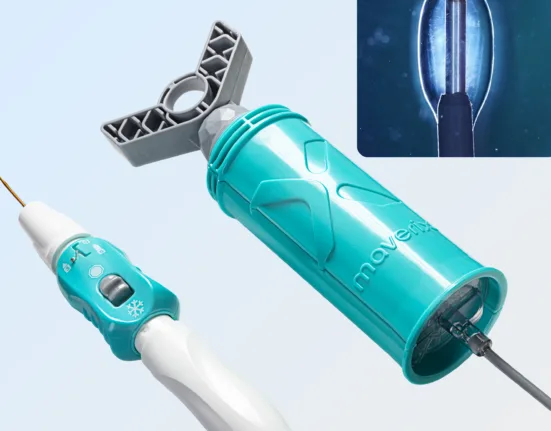
Photocure ASA is facing what could become one of the most consequential regulatory changes for its United States Cysview franchise in years after the U.S. Food and Drug Administration proposed moving cystoscopic systems used to aid bladder cancer detection from Class III into Class II. The proposal would replace the current premarket approval pathway for applicable blue-light cystoscopy equipment with a Class II framework subject to special controls and 510(k) premarket notification, potentially reducing a long-standing hurdle to bringing additional compatible equipment platforms into the US market.
The important word, however, is proposed. Photocure announced the FDA development on August 14, 2026, while the Federal Register notice is dated August 17 and opens a comment period through October 16. Until a final order takes effect, the affected cystoscopic systems remain Class III devices and manufacturers cannot rely on the contemplated Class II pathway.
For Photocure, the potential value of the change lies less in regulatory terminology than in equipment availability. Cysview, or hexaminolevulinate hydrochloride, is the FDA-approved optical imaging agent used before blue-light cystoscopy, but its commercial reach depends on hospitals and urologists having compatible imaging systems. Making the hardware pathway less burdensome could therefore attract additional manufacturers, accelerate product iterations and expand the installed equipment base on which Cysview utilization ultimately depends.
That distinction makes this more than a technical reclassification exercise. Photocure already had 436 active US blue-light cystoscopy accounts at the end of the second quarter of 2026, up 20% from a year earlier, suggesting that the technology has an established commercial footprint. The regulatory proposal could now determine whether equipment supply remains concentrated around a relatively restricted set of systems or evolves into a broader competitive market capable of supporting faster adoption.
Why is the FDA proposing Class II status after rejecting Karl Storz’s reclassification petition?
The history behind the proposal is unusually important because the FDA did not simply approve an earlier industry request. Karl Storz, manufacturer of the original photodynamic diagnostic system, petitioned the agency in October 2022 to reclassify devices under product code OAY from Class III to Class II and later submitted proposed special-control guidance. The FDA denied that petition on March 27, 2026 because it did not agree that the information and special controls submitted by the petitioner adequately supported the requested reclassification.
Yet the rejection did not end the regulatory question. FDA subsequently proceeded on its own initiative, conducting its own assessment of PMA information, peer-reviewed literature, Oncologic Drugs Advisory Committee material and post-market information. The agency now says there is sufficient information to establish special controls which, combined with general controls, could provide reasonable assurance of safety and effectiveness for the device category.
That sequence matters because the August proposal should not be portrayed simply as FDA reversing its March decision. The agency rejected the particular petition and controls put before it, then developed a separate proposed regulatory framework using the information available to the agency. For Photocure, the commercial destination may resemble what the company and equipment stakeholders had sought, but the regulatory route is distinctly FDA-led.
The regulatory history goes back much further. FDA approved the original Karl Storz PDD System PMA in May 2010 for use with Cysview as an adjunct to white-light cystoscopy for detecting non-muscle-invasive papillary bladder cancer in specified patients. A 2018 PMA supplement added a flexible video cystoscope subsystem and expanded the indication to include carcinoma in situ and patients undergoing surveillance cystoscopy for bladder cancer.
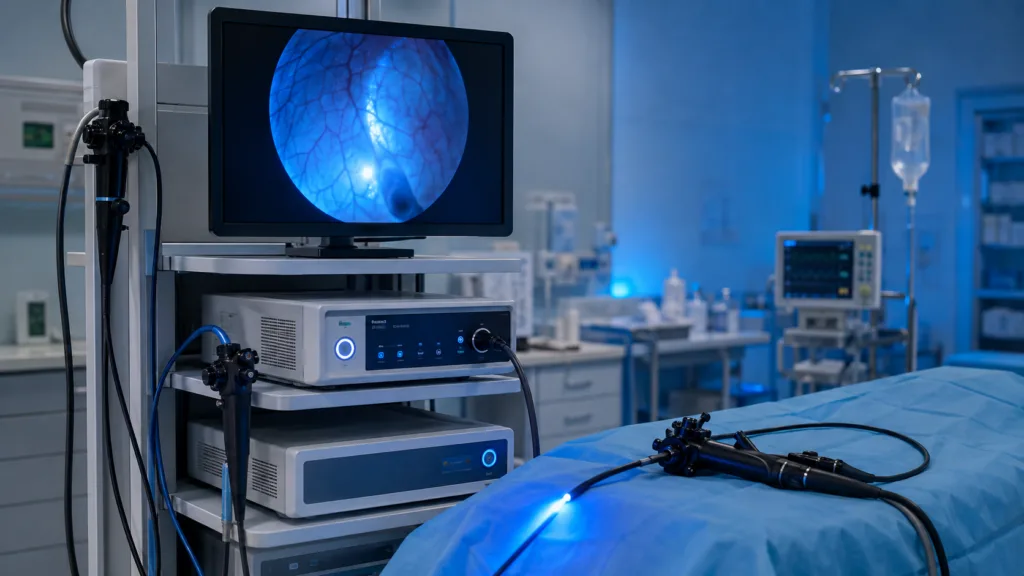
What would the proposed 510(k) pathway actually change for blue-light cystoscopy manufacturers?
Class II status would materially reduce the regulatory burden, but it should not be confused with deregulation. FDA is specifically not proposing to exempt these devices from premarket notification. A manufacturer seeking to introduce a qualifying cystoscopic system would still need to submit a 510(k) and obtain FDA clearance before marketing it in the United States.
The proposed controls are substantial. FDA would require clinical data confirming accurate detection when the device is used with the optical imaging agent identified in its labeling, including an assessment of sensitivity and specificity. Manufacturers would also have to address optical performance, illumination characteristics, electrical and mechanical safety, biocompatibility, software verification and validation, sterility where relevant, reusable-component reprocessing and detailed labeling requirements.
The practical difference is therefore one of regulatory proportionality. PMA is FDA’s most stringent device marketing pathway, while the 510(k) system is generally less burdensome and can involve shorter review timelines. FDA itself said the proposed change could make it easier for more manufacturers to develop these devices and potentially give patients more timely access to appropriately safe and effective cystoscopic systems.
That could matter particularly for product development cycles. Imaging companies frequently improve cameras, light sources, software, optics and system integration over successive generations. A regulatory architecture designed around Class II special controls may make those development programs more commercially attractive than a framework in which every qualifying system is anchored to the PMA environment. FDA has also raised the possibility of predetermined change control plans for future modifications where appropriately reviewed, adding another potential avenue for managing technology updates.
Why could equipment competition become more important to Photocure than the regulatory label itself?
Photocure’s economics create an unusual alignment between pharmaceutical utilization and medical-device availability. The company commercializes Cysview in North America, while the imaging equipment needed to perform blue-light cystoscopy comes from device manufacturers. More compatible towers and cystoscopes can therefore increase the number of clinical settings in which physicians have the option to use Cysview.
The equipment constraint has been particularly visible in flexible blue-light cystoscopy. Karl Storz disclosed in 2023 that it would discontinue production of its flexible BLC tower in the United States, while remaining committed to its Saphira high-definition rigid system and indicating that it would consider development of a next-generation flexible platform following a positive FDA reclassification. That history illustrates why Photocure has treated reclassification as a strategic issue rather than a regulatory housekeeping exercise.
Photocure’s US installed footprint is nevertheless expanding. During the second quarter of 2026, six new Saphira towers were installed, consisting of four new accounts and two upgrades, while the company’s active US account count reached 436. A larger population of equipment providers could broaden that expansion beyond the pace achievable through the current ecosystem and reduce the degree to which Cysview growth is tied to investment decisions at a limited group of cystoscopy manufacturers.
Photocure has also highlighted mobile access through its collaboration with ForTec as another way to bring blue-light technology into facilities without requiring every hospital to immediately purchase its own tower. Management believes the proposed Class II structure could encourage both standalone and add-on blue-light systems, potentially creating several routes for hospitals to add capability. That remains a company expectation rather than an assured consequence of FDA reclassification, since actual market entry will depend on manufacturers choosing to invest, completing development and obtaining clearance.
What evidence convinced FDA that special controls could adequately manage blue-light cystoscopy risks?
FDA’s proposal is notable because it rests on a conclusion about the maturity of the device category rather than merely on an industry argument that PMA is burdensome. The agency said available evidence supports public-health benefits from these systems because blue-light visualization can improve identification of potential malignant bladder lesions that may not be detected with white-light observation alone. The systems are explicitly adjunctive, however, and are not intended to provide the sole or definitive basis for a diagnosis.
FDA also identified risks that remain relevant under a Class II framework. False-negative results could contribute to delayed diagnosis or treatment, while false positives could expose patients to unnecessary biopsies, additional surveillance or inappropriate management. Device malfunction, electrical or thermal injury, infection or cross-contamination, electromagnetic interference and adverse tissue reactions were also included among the risks requiring mitigation.
The post-market record was one component of FDA’s assessment. As of April 30, 2026, the agency had identified 11 unique Medical Device Reports associated with product code OAY, with several relating to thermal injury from contact with a light cable. FDA also found one recall dating from 2012 involving labeling errors in system manuals; that recall was terminated in 2013 and FDA said it was not aware of related injuries. The agency considered the small number of reports and recall history consistent with a lack of significant post-market safety signals for the device type.
This does not mean every future system would automatically inherit the clinical credibility of existing equipment. The proposed special controls would require clinical data supporting accurate bladder cancer detection for the device and compatible approved optical imaging agent specified in its labeling. That requirement is important because a lighter regulatory classification does not eliminate the need to demonstrate that a new imaging platform performs appropriately in its intended clinical context.
How significant could FDA reclassification become for Photocure’s Cysview growth strategy?
Photocure enters the rulemaking process with an expanding commercial base rather than a pre-commercial technology waiting for its first market. Hexvix and Cysview revenue reached NOK140.0 million in the second quarter of 2026 compared with NOK135.6 million a year earlier, while Photocure raised its full-year constant-currency product revenue growth expectation to 8% to 11%. The company has simultaneously been building a broader bladder cancer diagnostics strategy through the acquisition of Vesica Health and research work around digital pathology, making Cysview an established commercial franchise within a widening diagnostic portfolio.
That makes the reclassification proposal potentially more valuable as a multiplier of existing infrastructure than as a standalone regulatory event. Photocure already has sales resources, clinical familiarity with Cysview and hundreds of active US accounts. If additional manufacturers enter with new rigid, flexible or add-on systems, Photocure could potentially expand the settings in which its imaging agent is used without having to become the primary manufacturer of the underlying cystoscopy platforms.
There are still several steps between that opportunity and a measurable commercial effect. The comment period runs until October 16, FDA must consider the submissions it receives, and the agency would then need to issue a final order before the regulatory classification changes. After that, new equipment manufacturers would still have to complete development and secure their own required marketing clearances.
The most meaningful test for Photocure will therefore come after the regulatory process, not simply when it ends. A final Class II order would remove a substantial structural obstacle, but the real commercial evidence would be new manufacturers committing capital, submitting 510(k)s, obtaining clearances and placing compatible systems into hospitals and outpatient settings. If that equipment expansion occurs, Photocure’s argument that reclassification can unlock wider Cysview adoption will become measurable in new accounts and procedure volumes. If manufacturers remain cautious despite the lighter pathway, the regulatory win could prove much less transformative than the headline suggests.