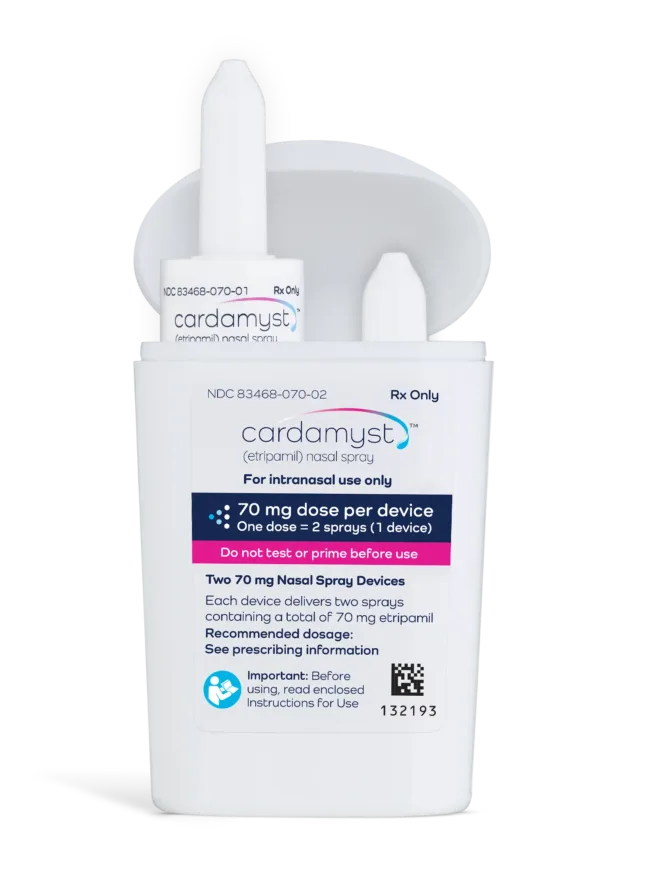
Milestone Pharmaceuticals Inc. (NASDAQ: MIST) has enrolled the first patient in ReVeRA-301, a pivotal Phase 3 trial testing whether etripamil nasal spray can be self-administered outside medical supervision to reduce rapid ventricular rates during symptomatic atrial fibrillation episodes. The multinational, randomized, double-blind and placebo-controlled study will enroll approximately 150 patients and use the same 70 mg repeat-dose regimen already authorized in the United States as CARDAMYST for acute symptomatic paroxysmal supraventricular tachycardia. Milestone is pursuing a single-study supplemental New Drug Application pathway for AFib-RVR, meaning a successful trial could give an existing approved nasal cardiovascular drug a substantially larger second indication.
The commercial and clinical proposition is unusual because Milestone is not trying to prevent atrial fibrillation or replace long-term stroke-prevention and rhythm-control strategies. It is attempting to create an on-demand medicine patients can use when AFib produces a rapid ventricular response, a situation that frequently sends symptomatic patients to emergency departments for intravenous rate-control therapy or electrical cardioversion. The trial’s central question is therefore whether an acute intervention currently associated with monitored medical care can become a reliable self-treatment pathway for appropriately selected patients at home.
What exactly will ReVeRA-301 measure?
Patients who experience symptoms they believe are associated with AFib-RVR will self-administer etripamil or placebo in a medically unsupervised environment such as the home. The primary endpoint is reduction in ventricular rate within 30 minutes, with a key secondary endpoint evaluating symptom improvement through patient-reported outcomes. The design is particularly significant because the intervention has to work under the conditions in which Milestone ultimately wants the medicine used, rather than demonstrating efficacy only when administered by trained staff in a hospital.
That setting creates additional complexity. A patient may recognize palpitations and rapid heart rate but still misidentify another rhythm disturbance as AFib-RVR, making real-world use less controlled than an emergency-room study where electrocardiographic confirmation is immediately available. Milestone’s pivotal design therefore has to show not simply that the calcium-channel blocker lowers ventricular rate pharmacologically, but that the treatment strategy remains useful when patients initiate therapy based on symptoms outside direct supervision.
The company intends to leverage CARDAMYST’s existing PSVT safety database alongside ReVeRA-301 rather than rebuilding a complete development programme from the beginning. This is why one successful Phase 3 trial may potentially support an sNDA, although FDA will ultimately decide whether the total data package provides sufficient evidence for the new indication.
Why can the same nasal drug potentially treat two different arrhythmias?
Etripamil is a rapid-acting calcium-channel blocker formulated for intranasal administration. In PSVT, certain re-entrant arrhythmias depend on conduction through the atrioventricular node, and sufficiently rapid AV-nodal blockade can terminate the episode and restore normal sinus rhythm. FDA has already approved CARDAMYST for conversion of acute symptomatic PSVT episodes to sinus rhythm in adults.
AFib-RVR presents a different objective. The drug is not necessarily intended to convert atrial fibrillation itself into sinus rhythm; rather, AV-nodal inhibition can slow the number of atrial impulses conducted to the ventricles, reducing the excessive ventricular rate that drives palpitations, breathlessness and other acute symptoms. That means the same pharmacology can serve different endpoints: rhythm conversion in PSVT and ventricular-rate control in AFib-RVR.
This distinction will matter commercially because clinicians already have multiple long-term AFib medicines, but few acute self-administered options specifically designed for a symptomatic RVR episode. Etripamil’s potential niche is therefore closer to a rescue medicine than a maintenance therapy.
What did the earlier Phase 2 study show?
ReVeRA-301 builds on ReVeRA-201, a randomized controlled Phase 2 study conducted in an emergency-room environment. Milestone says a single 70 mg dose of etripamil reduced ventricular rate and improved both symptom relief and treatment satisfaction compared with placebo. The new Phase 3 moves that same fundamental pharmacology into a medically unsupervised environment and uses the repeat-dose regimen already supported by the PSVT programme.
That transition matters because controlled hospital efficacy is only part of the value proposition. If the drug is to reduce emergency-department dependence, patients must be able to recognize an appropriate episode, administer treatment correctly and achieve enough rate reduction to feel and function better without creating excessive hypotension, bradycardia or conduction disturbances.
CARDAMYST’s existing labeling already includes cardiovascular contraindications and warnings relevant to calcium-channel blockade, including certain conduction disorders, pre-excitation syndromes and moderate-to-severe heart failure. Expansion into AFib therefore depends partly on establishing a patient-selection framework suitable for unsupervised use rather than simply showing another statistically significant heart-rate reduction.
How large could the acute AFib-RVR problem be?
Milestone estimates that atrial fibrillation affects more than six million people in the United States and cites market research suggesting that approximately 30% to 40% of patients experience at least one RVR episode each year requiring urgent medical attention. The company also cites historical healthcare data showing that nearly half of emergency visits carrying a primary AFib diagnosis resulted in inpatient admission.
Those estimates define a potentially large opportunity but should not be interpreted as the number of patients automatically eligible for etripamil. Some AFib patients will have structural heart disease, conduction abnormalities, unstable symptoms or other characteristics requiring emergency assessment rather than self-treatment. The eventual label, if approved, will determine how broadly physicians can prescribe CARDAMYST for this setting.
The healthcare-system argument is nevertheless clear. A treatment capable of safely slowing ventricular rate outside the emergency department could potentially avoid some acute visits, reduce time spent waiting for intravenous therapy and give selected patients greater control over recurrent symptomatic episodes.
What would a successful Phase 3 result still need to prove beyond heart-rate reduction?
The primary endpoint focuses on ventricular rate within 30 minutes, but symptom improvement will be essential to the practical value of the therapy. A numerical heart-rate reduction that leaves patients feeling severely symptomatic may not change emergency-care behavior, while meaningful relief without dangerous blood-pressure or conduction effects would strengthen the case for self-management.
Durability within an episode also matters. Investigators and regulators will need to understand whether rate reduction persists sufficiently, how often repeat dosing is needed and how frequently patients subsequently seek urgent care despite treatment.
That is what makes ReVeRA-301 more than an indication-expansion exercise. CARDAMYST has already shown that patients can administer a fast-acting cardiovascular drug through the nose for PSVT. The Phase 3 AFib programme asks whether the same delivery model can move another acute arrhythmia problem away from IV therapy and into carefully selected home use.